

Insights for policymakers
The creative industries have experienced a glorious decade punctuated by a challenging year. Over the last 10 years, the sector has grown at a rate more than twice that of the total UK economy and in 2018 contributed £111.7bn, accounting for 5.8 per cent of total UK GVA. Moreover, with the fourth industrial revolution in full swing, creative skills are set to be in high demand in the economy more generally with the number of creative jobs predicted to increase dramatically as AI and automation reduce the need for routine labour.
Yet despite the fundamental importance of highly skilled creative workers to the creative industries’ ability to generate extraordinary growth, UK higher education’s provision of training in creative subjects is currently being placed under threat. The recommendations of the Augar Review – that subjects which fail to provide ‘value for money’ should receive less government subsidy – has worried practitioners, recipients and beneficiaries of creative education since its publication in 2019. This has been compounded by recent announcements from government that university bailouts could be contingent on the dropping of ‘low value’ courses which could on some measures place creative education squarely in the firing line. This is because, according to a recent report from the Institute for Fiscal Studies (IFS), commissioned by the Department for Education, lifetime earnings for those who studied a creative arts and design degree are no better than for those who didn’t go to university at all, meaning that these courses could be seen as offering low value for money, both for the graduates taking these courses and for the tax payer.
Using new research, by the PEC’s researchers at the University of Sussex, this policy briefing demonstrates the value of creative higher education by establishing a clear link between studying a creative subject at university and gaining meaningful graduate employment in creative work. This, in turn, points out the issues with current policy discourse’s reliance on salary data as an indicator of Higher Education’s value for money and suggests that disruptions to the creative talent pipeline would likely damage the sustainability of the UK’s fast growing creative industries and other sectors which increasingly rely on creative work.
Please reference this paper as:
Bloom, M. and Bakhshi, H. (2020) Policy Insight: Graduate motivations. London: Creative Industries Policy and Evidence Centre and University of Sussex. Available from: https://www.pec.ac.uk/policy-briefings/graduate-motivations-and-the-economic-returns-of-creative-higher-education-inside-and-outside-the-creative-industries
Published 31st July 2020
Photo by Retha Ferguson
Related Policy Briefings

Policy Brief: Creative Freelancers
Evidence, insights and recommendations to support the Government's new Freelance Champions.

Harnessing the growth potential of createch
This insights paper summarises existing evidence on the present opportunities and challenges in crea…
Policy Brief: Creative Industries Employers’ Perspectives on Skills Initiatives: 2025
Overview The Government’s new Industrial Strategy sets a long-term, sector-focused approach to skill…

Policy Brief: Migration in UK Creative Occupations and Industries
Overview The UK’s creative industries are internationally oriented, a fact that’s reflected in its e…

Policy Brief: Arts, Culture and Heritage: Recent Trends in UK Workforce and Engagement in England
Overview Five years after the Covid-19 pandemic, engagement and employment in the arts, culture and …
Policy Brief: Foreign Direct Investment in the UK’s Creative Industries
Read the Policy Brief based on the most recent State of the Nations Report on FDI.
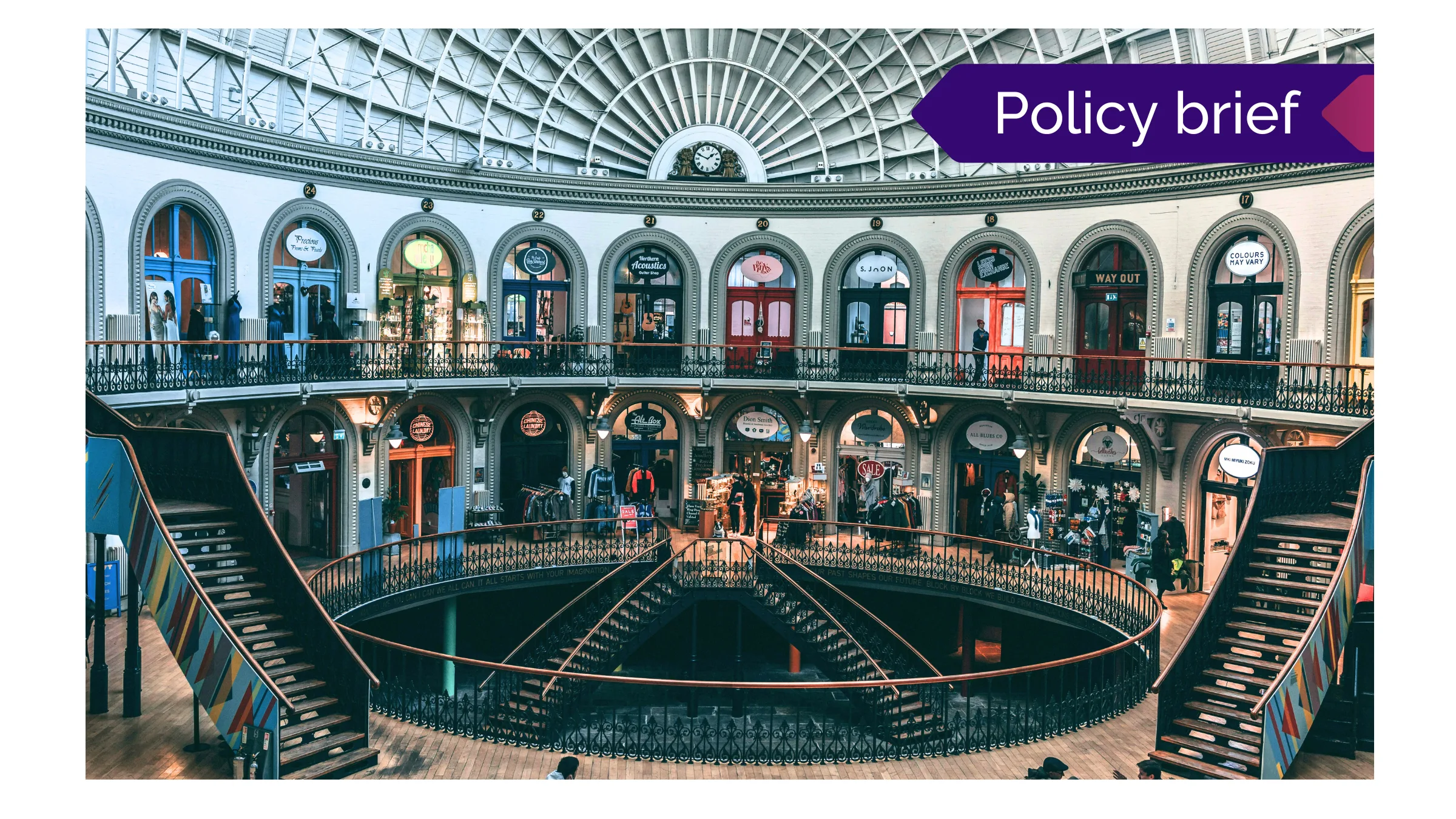
Policy Brief: Insights from the Northern Creative Corridor Workshops Sprint
The Northern Creative Corridor is an initiative aimed at connecting creative clusters across Norther…
Policy Brief: International Trade and the UK Creative Industries
This policy brief examines international trade in the UK creative industries. Drawing on our UK Trad…

Policy brief: Audiences and Workforce in Arts Culture and Heritage
This policy brief uses census data to provide, for the first time, a comprehensive analysis of audie…

Policy Brief: Transitioning to Sustainable Production across the UK Theatre Sector
This policy brief outlines recommendations for transitioning to more sustainable theatre production …

Authors’ Earnings in the UK
This policy briefing sets out areas for possible policy action, proposed by the researchers at CREAT…

Television production, international trade and pressures to consolidate
The UK television production sector is one of Britain’s leading creative export sectors. This briefi…
