

The Creative Industries are already a driver of growth across the UK economy. Export-intensive and major employers, they also attract significant investment from overseas. Large and small clusters of creative businesses up and down the country are the engines behind this growth, which also provides additional benefits that accrue to other individuals, businesses, and places (otherwise known as spillovers). These benefits are not just economic but also cultural, intellectual, and social in nature.
There is a clear opportunity for the North of England to develop a cross-regional strategy to support the growth of the Creative Industries. Clusters of intense creative activity in the North are more geographically dispersed than those in the super-cluster that is London and the South East of England, which is dominated by the capital. As such, it would benefit from a coordinated plan which builds on existing strengths and maintains local specificities. Such a strategy would not be a zero-sum game: previous research by Nesta suggests that regional ‘rivals’ are more successful when they work together to grow their Creative Industries.
The opportunity is considerable. As a share of the local economy, the creative industries in the North currently contribute less than 3% to GVA. In London and the South-East, this sector share is closer to 10%. If the North were to grow its sector share even relatively modestly the grow benefits would be considerable. For example, if the sector share rose to around half levels in London and the South-East, this would be equivalent to a GVA boost of around £10 billion by 2030.
This background paper sets out how policymakers and industry could work together to realise this potential, via ‘creative corridors’.
Related Discussion Papers

Creative Industries and Place: Configurations and Scales
Download this Discussion Paper by the Creative Industries & Place Small Research Network, examining …

Screen Green Transitions
Download the Discussion Papers by the Screen Green Transitions Small Research Network, looking at di…

A Silver Lining? Consumer Preferences over Human-Made and AI-Generated Production in Two Domains
This paper assesses whether consumers are willing to pay more for human-made versus AI-generated ima…

Demand for Creativity and AI Skills in the Post-ChatGPT Labour Market
This study examines the evolving relationship between employer demand for creativity and AI skills i…

Regional Trade Agreements, Cultural Provisions and Trade in Cultural Goods
Analysing the impact of Regional Trade Agreements on the bilateral trade of cultural goods from 1999…

International Trade Challenges and the Effectiveness of Support Measures for the UK’s Creative Industries
The formidable challenges confronting the UK’s creative industries in the realm of exports, st…
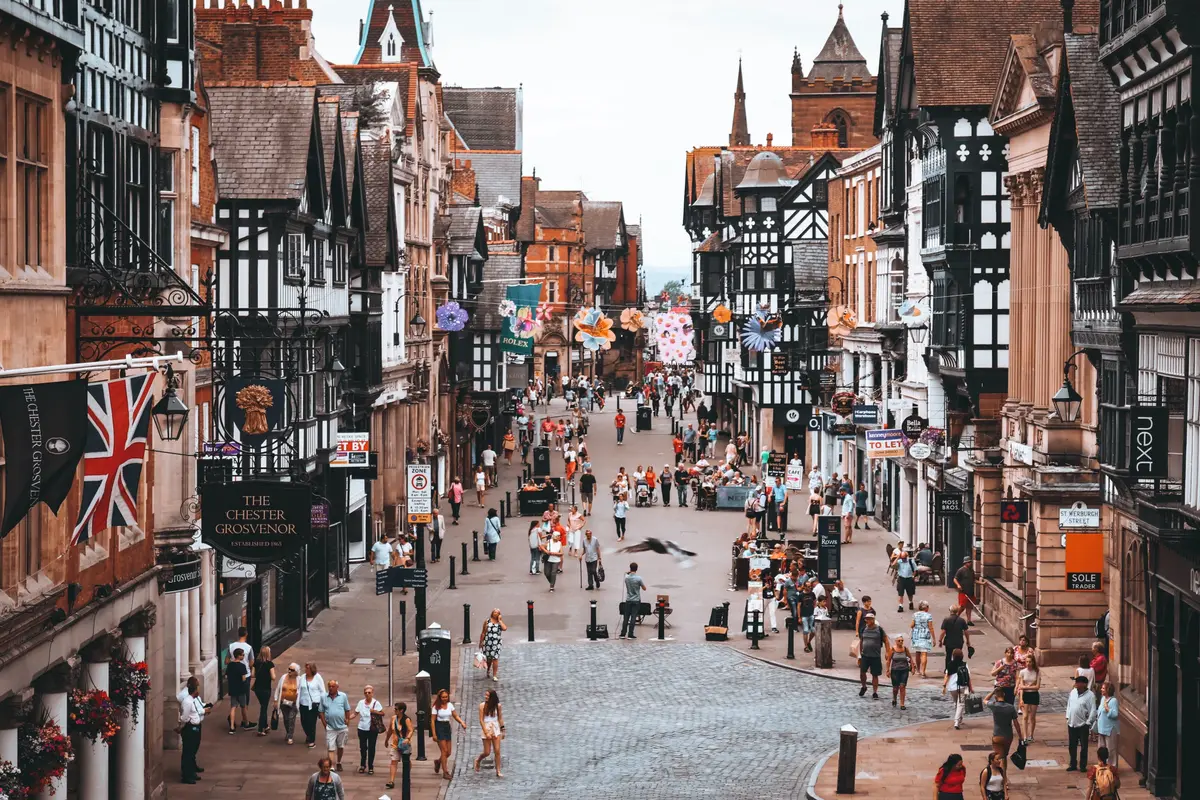
Northern England’s Creative Industries
The Creative Industries are already a driver of growth across the UK economy. Export-intensive and m…

Creative Destruction? Creative firms, workers and residential gentrification
A new study by Tasos Kitsos, Max Nathan, and Diana Gutierrez-Posada finds only a minor influence of …

Speaking with One Voice
A fundamental remit of the BBC, and other public service broadcasters (PSBs) like ITV and Channel 4,…

Transitioning to Sustainable Production across the UK Theatre Sector
This discussion paper examines transitional pathways to sustainable theatre production in the UK. By…

Identifying and analysing UK fashion micro-clusters
The UK’s Fashion and Textiles industry contributed almost £20 billion to the UK economy in 202…

Net Zero as a catalyst in fashion micro and small enterprises
This report identifies examples of work taking place across three levels of change – social, e…
