As London Mayor Sir Sadiq Khan announces £2.2 million in new funding for Creative Enterprise Zones, we asked Justine Simons OBE, Deputy Mayor for Culture and the Creative Industries, to share why and how London is choosing to invest in artists and creatives.
Creative Enterprise Zones started as an experiment. We asked ourselves, could we reverse the decline in artist studios? Eight years on and 12 zones later, the results are in. Creative Enterprise Zones have taken root across all of London and they are having a big impact. They are on track to deliver 80,000 square metres of new affordable permanent workspace – the equivalent of 10 Wembley sized football pitches.
In January, Sadiq Khan announced £2.2 million in new funding to further expand the successful programme and demonstrate London’s belief that artists have a critical role to play in the economic and cultural vitality of the city. Creative Enterprise Zones have been proven to provide affordable permanent creative workspaces so that artists and creative businesses can put down roots in their local areas.
Creative Enterprise Zones have led to:
- 500 creative businesses supported
- 700 jobs created
- Grants awarded to improve insulation and energy efficiency
- Advice and business support provided
- Skills budgets unlocked
- Pro-culture planning policies developed
A joined-up approach
This joined up approach to investment ensures artists and creatives can stay in the capital and have the support they need to start-up and grow. Our research shows that creative businesses in a Creative Enterprise Zone grew on average by 22 per cent since the pandemic, compared to -4 per cent for creative businesses in the rest of the capital.
Sadiq also announced that nine boroughs secured reaccreditation for their Creative Enterprise Zones. They have funding for the next three years to continue delivering affordable creative workspaces and strengthening local creative ecosystems. It’s a huge vote of confidence in the work they’re doing, so congratulations to: Acton and Park Royal, Croydon, Hackney Wick (Lower Lea Valley), Hammersmith & Fulham, Tottenham in Haringey, Hounslow, Brixton in Lambeth, Blackhorse Collective in Waltham Forest.
The Mayor’s investment also helped to secure the future of the Acme Propeller Factory in Deptford – London’s largest affordable artist studios, with 180 artists now enjoying their spaces. For 35 years, this building has been a cornerstone of Lewisham’s cultural life and a vital part of London’s creative infrastructure. This landmark acquisition concludes a two-year public campaign to safeguard one of London’s most important sites for creative production for generations to come.
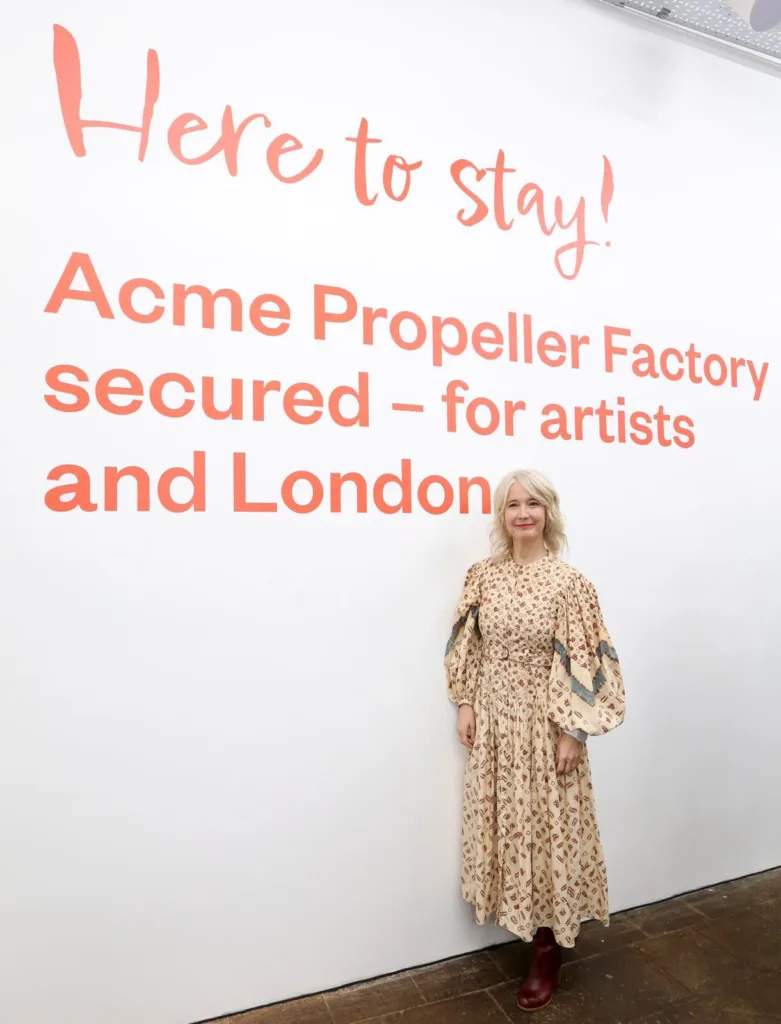
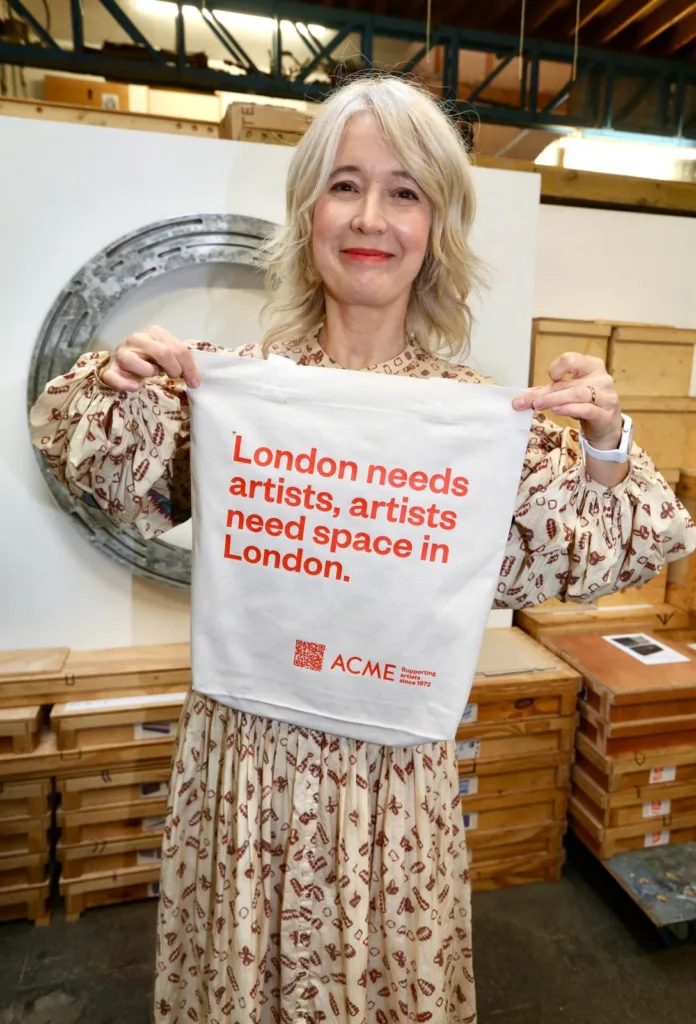
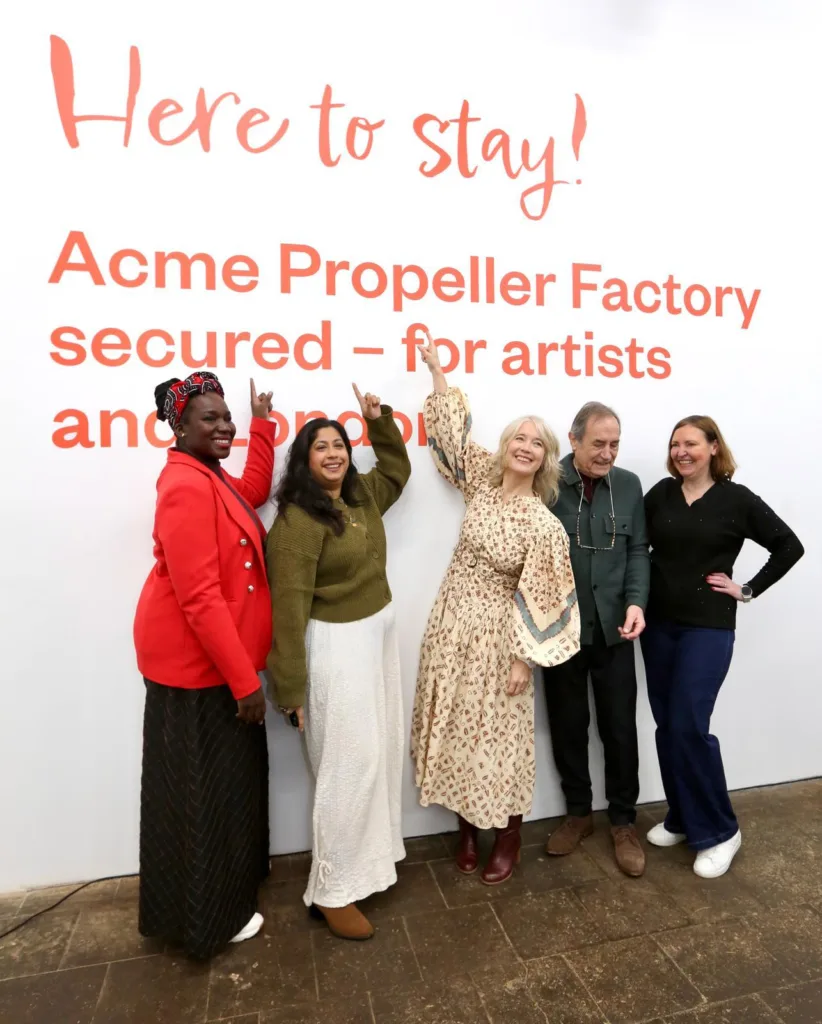
Photo credit: GLA/JamesOJenkins
Why invest in artists?
Some might ask why we care so much about artist studios, when there are so many challenges in our world. We firmly believe artists are the lifeblood of our creative industries and help drive the economy. The creative economy generates £64 billion a year for London. And one in five jobs in this city is a creative one. But more than that, culture is who we are as a city, it’s part of our identity. Culture is revitalising our neighbourhoods and brings our communities together. Making sure creatives have the space to produce their work is not just ‘a nice to have’ for our capital.
Artists need London, just as much as London needs artists. At City Hall we remain laser-focused on helping to future-proof London as a world-class creative capital now and for generations to come.
Justine Simons OBE
London’s Deputy Mayor for Culture and the Creative Industries
Photo by Benjamin Davies on Unsplash
