Creative PEC Research Fellow Leandro Valiati (Professor of Cultural and Creative Industries, University of Manchester) looks back at the creative industries in the 21st century and the pivotal year that changed everything.
This blog is the first in a new Creative PEC expert series exploring ideas that challenge or expand current thinking about the creative industries.
In Italo Calvino’s Invisible Cities, Marco Polo describes to Emperor Kublai Khan the dozens of cities he rules but will never see. He owns them all on paper and yet knows almost none of them first hand. Anyone who has written a national creative industries strategy perhaps knows the feeling.
In my new book Creative Industries Development Policy I argue that there are two twenty-first centuries. The first, from 2000 to about 2020, was intense and confident until the 2020s decade fractured it. The second, from 2030 onwards, still has to be built. So, what did creative industries policy get right and wrong in the first, and what will the second need?
Short version: judge policy by what changes in people’s lives and places, not a slogan for a shiny new banner.
2000–2020: what worked, what didn’t
Globalisation was in full swing, in the UK Cool Britannia had turned a sector into a national brand, and the DCMS’s 1998 creative industries mapping exercise was being copied from Bogotá to Bangkok. British Council’s Mapping the Creative Industries: A Toolkit, with BOP Consulting was published in English, Arabic, Polish, Portuguese, Spanish and Russian. It shows the UK actively exporting the model.
China was the world’s factory, and the unspoken assumption was that the high-value end of the business would stay with richer economies.
Some of it worked. Mapping gave ministers numbers, numbers got the creative industries a seat at the table, and a few cities built clusters that are important to this day.
There was to some extent an assumption that success would spread on its own. It mostly didn’t. Growth clustered in a few big cities, and the jobs went largely to people whose families could bankroll an unpaid start, or had existing connections in the arts. Digital technology reached the Global South late, and on terms set by a few big platforms based in the US and Europe, which decided who could earn, how much, and who kept the data. A song streamed in São Paulo typically earns its artist around a quarter of what the same play earns in London.
The 2020s: the ground moves
The pandemic shut venues overnight, a health crisis became a social and economic one, and many freelancers fell through the gaps in government support. Social Media platforms, and now AI, set off a wave of creative destruction (the economist’s term, not a review of the output), and the fight over AI training on artists’ work is really a fight about who gets paid. China, meanwhile, went from making other countries’ products to exporting its own ideas: think TikTok, or hit video games like Black Myth: Wukong. So much for the high-value end staying in rich economies. Supply chains are being rebuilt around security rather than cost, and politics has turned inward, sometimes ugly, with tighter borders and suspicion of foreigners. That hurts a sector that lives on touring, co-productions and international talent – ask any British band trying to tour Europe.
The toolkit of the first twenty-first century (mapping, clusters, city branding, a bet on intellectual property) assumed open markets, a lasting lead for rich economies and growth that would trickle down. I’d argue none of those assumptions survived the 2020s.
2030 onwards: from slogans to substance
In his final lectures, Six Memos for the Next Millennium, Calvino made the case for exactitude: language that is precise rather than automated, where meaning can be flattened. Creative industries policy has leaned towards the automatic. “Creative city”, “orange economy”, “cultural regeneration”. To be fair, slogans launch strategies and win investment. They just can’t deliver. If the test is whether policy improves lives, I’d suggest four fundamental shifts are needed:
- Inclusion: This has to come first. Who is missing from the local creative workforce, and why, should shape a programme from the start, not surface as a footnote in the evaluation.
- Access to the Means of Production: Less radical than it sounds. Talent isn’t scarce anywhere; studios, kit, broadband, finance, rights ownership and, increasingly, control over data and AI tools are. Policy should spread these, not just applaud those who have them.
- Democracy: Communities ought to share decisions about what gets funded, not just be asked for their views once the plans are drawn up. Arts Council England’s 2028–33 funding round is a step this way, with a survey and new regional boards advising on local priorities, though the final calls still rest with the Arts Council. Porto Alegre in Brazil pioneered participatory budgeting in 1989. Paris borrowed the idea in 2014, handing residents a vote over around 5% of its investment budget, with at least 30% of that reserved for working-class neighbourhoods. Policy, it turns out, can travel north.
- Creative Opportunity: Finally, we need to build bridges between islands of creative opportunity and the neighbourhoods of real economic hardship around them. In Greater Manchester, MediaCityUK sits a short walk from some of England’s most economically deprived areas; how many local young people have made that walk is still debated. Paid entry routes, school partnerships, affordable space, buses that actually run. This is what a more solid bridge looks like.
Learning from the Global South
When Gilberto Gil’s culture ministry launched Brazil’s Pontos de Cultura in 2004, it didn’t build flagship venues. It funded groups that already existed, often in the poorest neighbourhoods, with modest, regular money and kit. Twenty years on, around 10,000 community groups across Brazil are recognised as Pontos de Cultura. It had real problems, from late payments to funding that rose and fell with the politics. Still, it reversed the usual logic: rather than asking communities to come to the creative economy, it went to them.
None of this means romanticising the South, or assuming what worked in Recife will automatically work in Manchester. It does mean ending the one-way traffic of the early 2000s and swapping ideas as equals.
Calvino, I think, would have approved. Invisible Cities closes with Polo telling the Khan there are two ways to live with the inferno around us: get so used to it that we stop seeing it, or, harder, learn to spot the people and things within it that are not part of it, and give them room. I can’t think of a better definition of place-based policy.
Questions worth asking
Who benefits from our creative economy, and who is locked out? Who owns the spaces, tools, rights and data locally? What already exists that we could strengthen rather than replace? How would we know if a policy improved lives, not just output? And what might we learn from places economically poorer than ours?
Kublai Khan had the excuse of an empire too large to visit. Most local authorities don’t.
Find out more about Leandro Valiati at www.valiatileandro.com
This article was produced for Creative PEC. The views and opinions expressed in the article are those of the author and do not necessarily represent the views of Creative PEC.
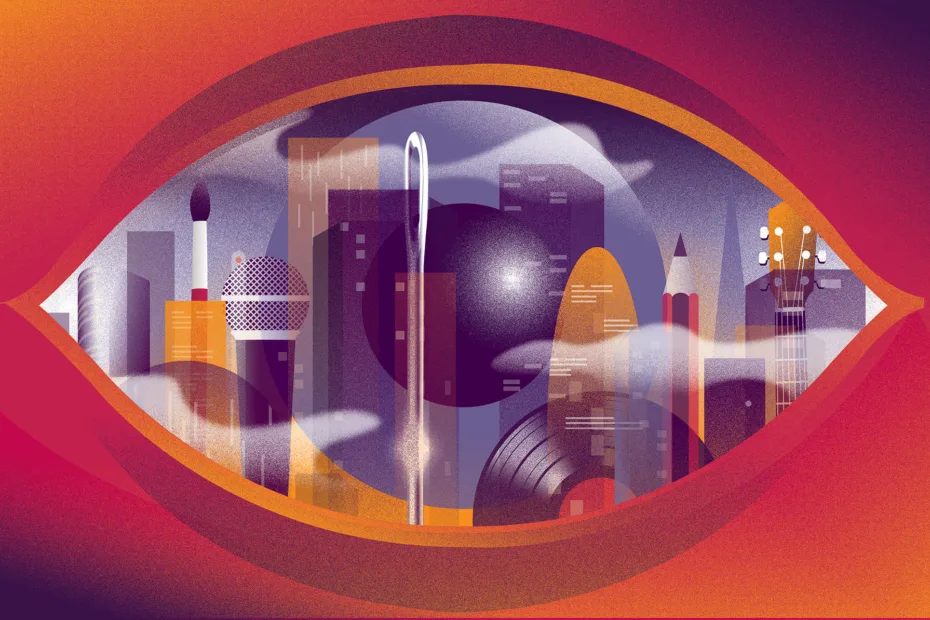
Illustration by Neil Webb
