This guest blog is from Professor Sara Louise Pepper, a member of our Global Creative Economy Council. Find out more about Sara.
Since the late 1980s, the evolution and growth of the global creative economy has been increasingly well documented. Such is the scale of this activity globally there is now interest from a range of global institutions including the United Nations (UN and UNCTAD), World Trade Organisation (WTO), the World Bank, International Finance Corporation and the European Commission (EC). In parallel, there has been an increased interest in cultural policy. Defined as “the promotion or prohibition of cultural practices and values by governments, corporations, institutions and other actors” (International Journal of Cultural Policy) it is important because it impacts who creates, what gets support, how value is enabled and who benefits. Ultimately, it regulates global markets by impacting decisions about resources, participation and creative freedom, linking to issues around power, diversity and equity in cultural activity and engagement.
In this context, cultural policy is increasingly positioned as a strategic instrument contributing to much more than economic development. There is an increasing discourse about its role in wider international relations including delivering diplomatic outcomes such as fostering mutual understanding, building trust, and delivering social outcomes that extend well beyond the cultural and creative sectors.
This ever-expanding cultural policy remit raises a critical question: who is the primary beneficiary? Is its orientation predominantly toward the present or does it also account for the needs and rights of future generations? Moreover, if it were to be reconceptualised through an intergenerational lens, how might international cultural policy be reshaped by explicitly centring future generations as legal and ethical stakeholders?
The Well-being of Future Generations
In Wales, my home for the past 25 years, we have a law that helps us all work together to consider how our decisions impact our environment, economy, society and culture now and for our future. Passed in 2015, Wales’ pioneering legal framework the Well-being of Future Generations Act, offers a bold response to the question of cultural policy and timely relevance. It presents a values-based, future-focused model that places future generations at its core offering a perspective and lessons which international cultural policy could learn from.
The Well-being of Future Generations Act focuses on ensuring that current social, economic, environmental, and cultural decisions do not compromise the quality of life for those yet to be born. The Act requires public bodies in Wales to work better with others (including our communities) and take a more joined up, long-term approach so that decisions impact positively on those living in the future as well as the present. There are seven connected well-being goals for Wales which set out a common vision for public bodies to work towards as illustrated in the diagram:
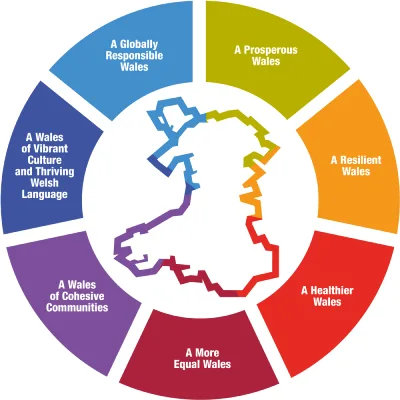
Source: https://www.gov.wales/well-being-of-future-generations-wales
And there are also principles that the public bodies listed in the Act must demonstrate in their decision making in order to show that they are considering the impact that they could have on people living in Wales in the future. These include five enabling and focused Ways of Working:
- long-term
- prevention
- integration
- collaboration and
- involvement
The Act encourages us to think about the positioning of culture, including importantly the Welsh language, in our society today and in the future. It encourages us to consider culture as central to the wellbeing of future generations because it can shape how our society is making meaning, creating knowledge, and developing shared values and identity. It positions culture as more than a ‘nice to have’ but as infrastructure for wellbeing both now and in the long-term. This process of critical questioning strengthens our ability to communicate culture to others resulting in a deeper understanding of our own cultural contexts. This level of understanding explains who we are culturally today and how this culture matters in the future. It also enables an integrated perspective as well as a long-term one – ensuring that culture is the responsibility of not only our cultural organisations but of all our public bodies from health boards to national parks and local authorities to emergency services. This joined up approach has significant benefits when Wales participates in intercultural dialogue and exchange internationally.
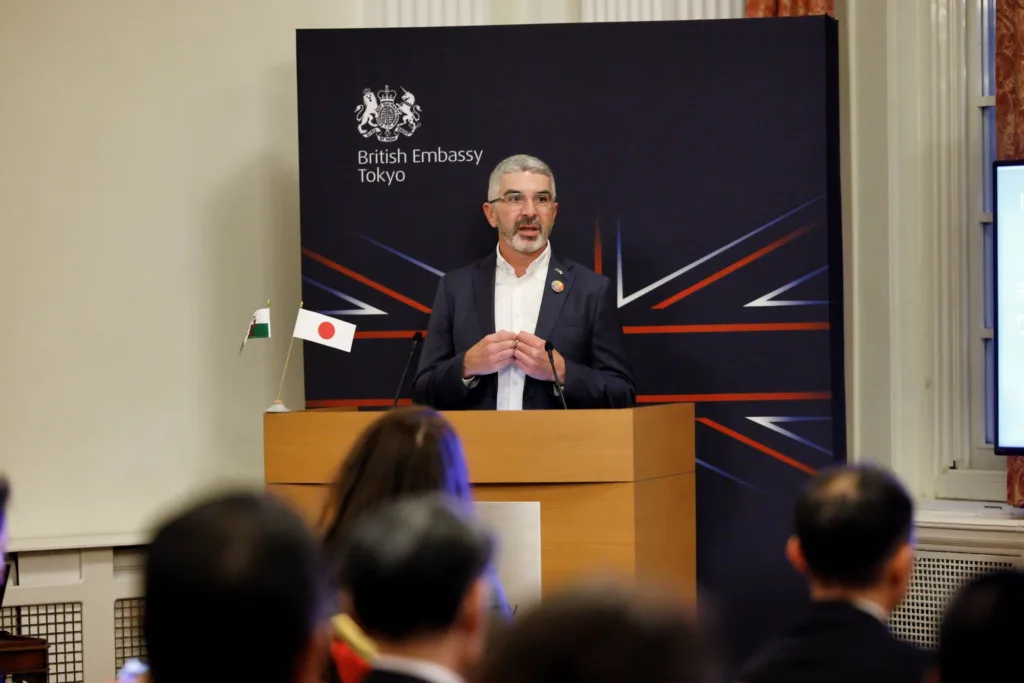
Derek Walker, Future Generations Commissioner, at the British Embassy in Tokyo. Photo by Sara Louise Pepper.
A recent conversation with Derek Walker, the Future Generations Commissioner, highlighted this opportunity and imperative. We met at the British Embassy in Tokyo during Wales in Japan Year 2025 – a year-long initiative to strengthen ties between the two nations. We discussed the value that culture plays in policy initiatives such as Wales in Japan – particularly by focusing on promoting cultural exchanges to foster shared understanding. We discussed the fact that Wales’s Well-being of Future Generations Act is unusual in policy of this kind for including the cultural wellbeing dimension and the importance and value of this.
Derek said: “Culture shapes the stories we tell about who we are and who we aspire to become. If we want future generations to inherit a world rich in identity, creativity, and belonging, we must design cultural policies that look beyond the short term. Investing in culture is not just about preserving the past; it is about empowering generations to come to imagine new possibilities, build resilient communities, and navigate a rapidly changing world with confidence and connection.”
International cultural policy could also benefit from this understanding and framing. Investing in the cultural and creative industries and developing cultural policy is about supporting the present, but it also safeguards the social infrastructure for future generations. Recognising culture as a long-term public good ensures that cultural policy contributes to intergenerational equity, rather than serving only immediate economic or diplomatic objectives.
For Wales, and for the world, the Well-being of Future Generations Act provides both a moral compass and a practical policy toolkit. This lens allows us to move cultural policy from exchange (the movement of ideas, arts and people) to stewardship (responsible, long term management and care of culture) for those living today and for those not yet born. Moving this work from short-term project-funded activity which faces challenges around power, cultural mobility and inclusion to an opportunity for genuine, grassroots co-creation with young people. An opportunity to imagine a shared, global cultural future with wellbeing at its core.
