Tourism represents a major source of economic activity for many urban areas, yet its rapid expansion has increasingly generated environmental pressures and social tensions in host communities. Several countries, including Italy, have introduced tourist taxes intended to correct tourism-related costs and enhance local welfare. This seminar uses evidence from Italian municipalities to address whether tourist tax revenues strengthen local cultural provision or reinforce tourism-sector expenditure.
- 3pm, Thursday 2 July 2026, online
In Italy, municipal governments have been allowed to introduce a tourist tax since 2011. Revenues are earmarked for tourism- and heritage-related spending. From a cultural economics perspective, this institutional setting raises a central question: do tourist tax revenues strengthen local cultural provision thereby supporting urban vibrancy, heritage preservation, and residents’ welfare—or do they primarily reinforce tourism-sector expenditure?
This seminar outlines research by Chiara Dalle Nogare (University of Brescia) and Valentina Montalto (KEDGE Business School, Creative Industries & Culture Expertise Centre – Paris), which addresses this question by constructing a novel municipality-level panel dataset combining detailed expenditure data in tourism and culture with tourist tax revenues for more than 8,000 Italian municipalities over the period 2011–2024. By providing evidence on the fiscal allocation of tourism-generated revenues, this work contributes to the literature on local government commitment to tourism and heritage. More broadly, it speaks to ongoing policy debates about whether tourism taxation can effectively support sustainable urban development.
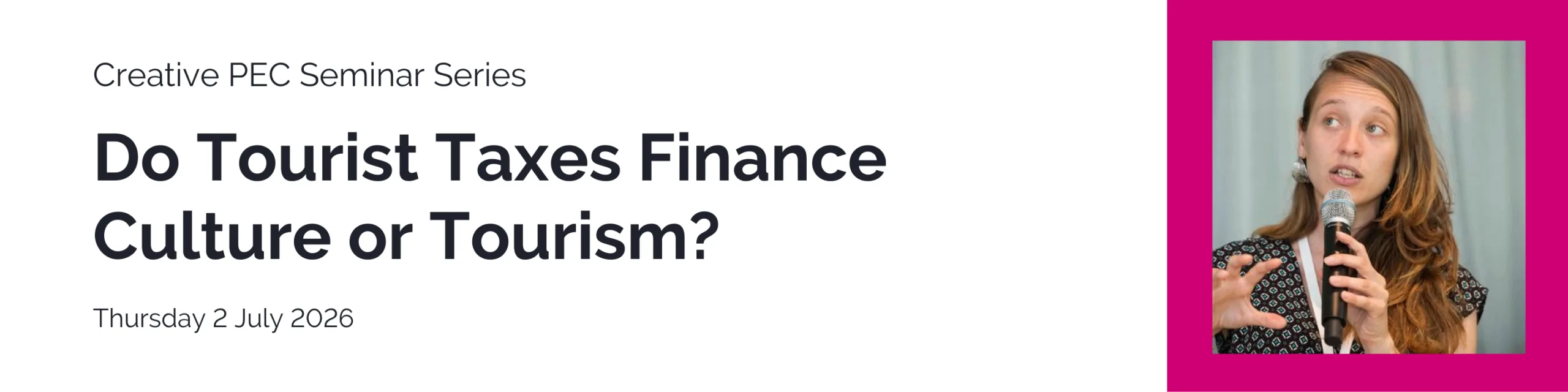
During the session, Valentina Montalto will discuss the study’s data, methodology and findings. There will be time for Q&A following the presentation.
This 1-hour talk is part of Creative PEC‘s Seminar Series.
Speakers

Valentina Montalto
Associate Professor of Cultural Policies and Economics
KEDGE Business School
Valentina Montalto is Associate Professor of Cultural Policies and Economics at KEDGE Business School, Paris. Her research lies at the intersection of urban geography, cultural economics, and social statistics to inform urban cultural policies. For over 17 years, she has worked internationally, leading the “Cultural and Creative Cities Monitor” at the European Commission’s Joint Research Centre, advising on UNESCO’s Culture|2030 Indicators, and managing research projects at KEA, a Brussels-based policy firm. Her research is reflected in numerous publications on Creative Cities, Cultural and Creative Sectors’ measurement, and culture’ contribution to Sustainable Development.
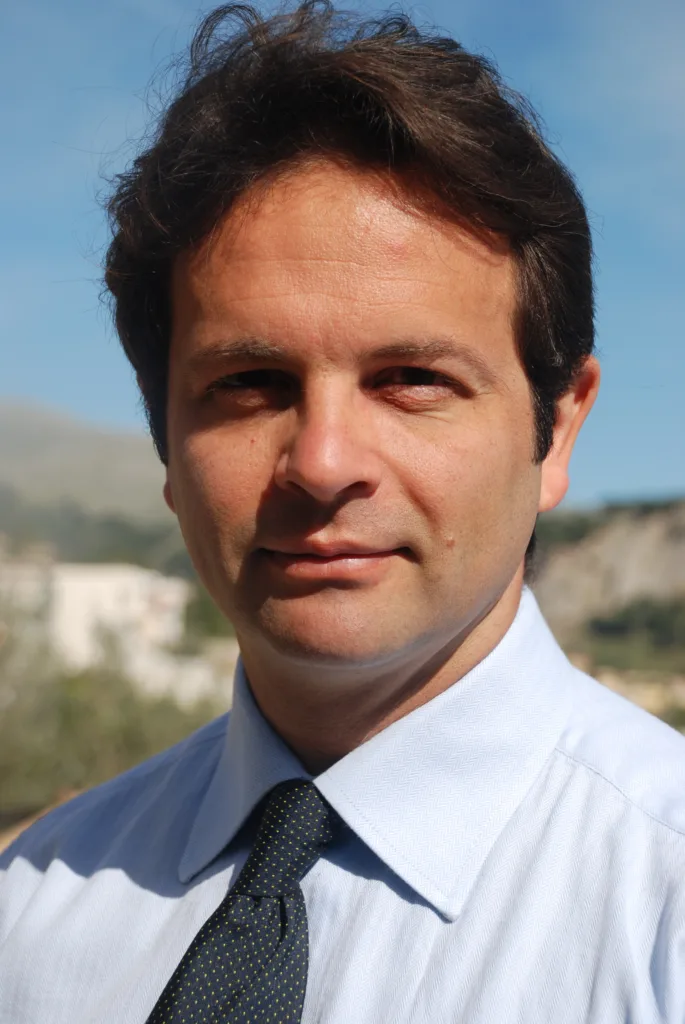
Giorgio Fazio (chair)
Professor of Macroeconomics
Newcastle University
Giorgio Fazio is an applied economist with expertise in macroeconomics, trade and investment. He has published several articles in international peer-reviewed journals and chapters in edited books on issues such as exchange rates determination, crises and contagion, growth, and convergence at the national and regional levels, productivity, innovation, trade and FDI, civic and cultural capital, creative industries economics.
He has been a Creative PEC researcher since 2018, leading the work on international trade, investment and migration and contributing to economic research in the creative industries in PEC Discussion papers, blogs and peer reviewed journal articles.
Giorgio is Chair of Macroeconomics at Newcastle University Business School and since 2023 is the Research Director of the Creative Industries Policy Evidence Centre.
