

One of the defining features of the creative industries is a high reliance on freelancers whether that is in film, design, tech or the arts. 32% of the creative industries workforce as a whole is self-employed (including freelancers), compared with 16% of the UK workforce (Oct 2019 – Sept 2020, DCMS, 2021).
In fact, across the whole economy the last decade has seen a rapid growth in self-employment, with self-employed people representing 15.3% of employment in 2019, up from 12% in 2000.
Yet, despite being an essential and growing part of the workforce, creative freelancers are poorly served by many parts of the policy infrastructure.
COVID-19 has exposed the lack of support for self-employed workers. Many struggled to access the government’s income support schemes, and PEC research has exposed how some creative sub-sectors have been particularly hard hit, with a loss of 68,000 jobs in the performing arts sub-sector in 2020.
In particular there are three key areas, in skills, immigration, and employment policy, where freelancers have been under-served.
This briefing sets out how the research published as part of the PEC’s ‘Freelancer Fortnight’ can help policymakers to better understand this part of the economy and to recognise that, when it comes to designing policy for freelancers, One Size Can’t Fit All.
Please reference this paper as:
Easton, E., Beckett, B. (2021) Freelancers in the Creative Industries. Creative Industries Policy & Evidence Centre, Available from: https://pec.ac.uk/policy-briefings/freelancers-in-the-creative-industries
Related Policy Briefings
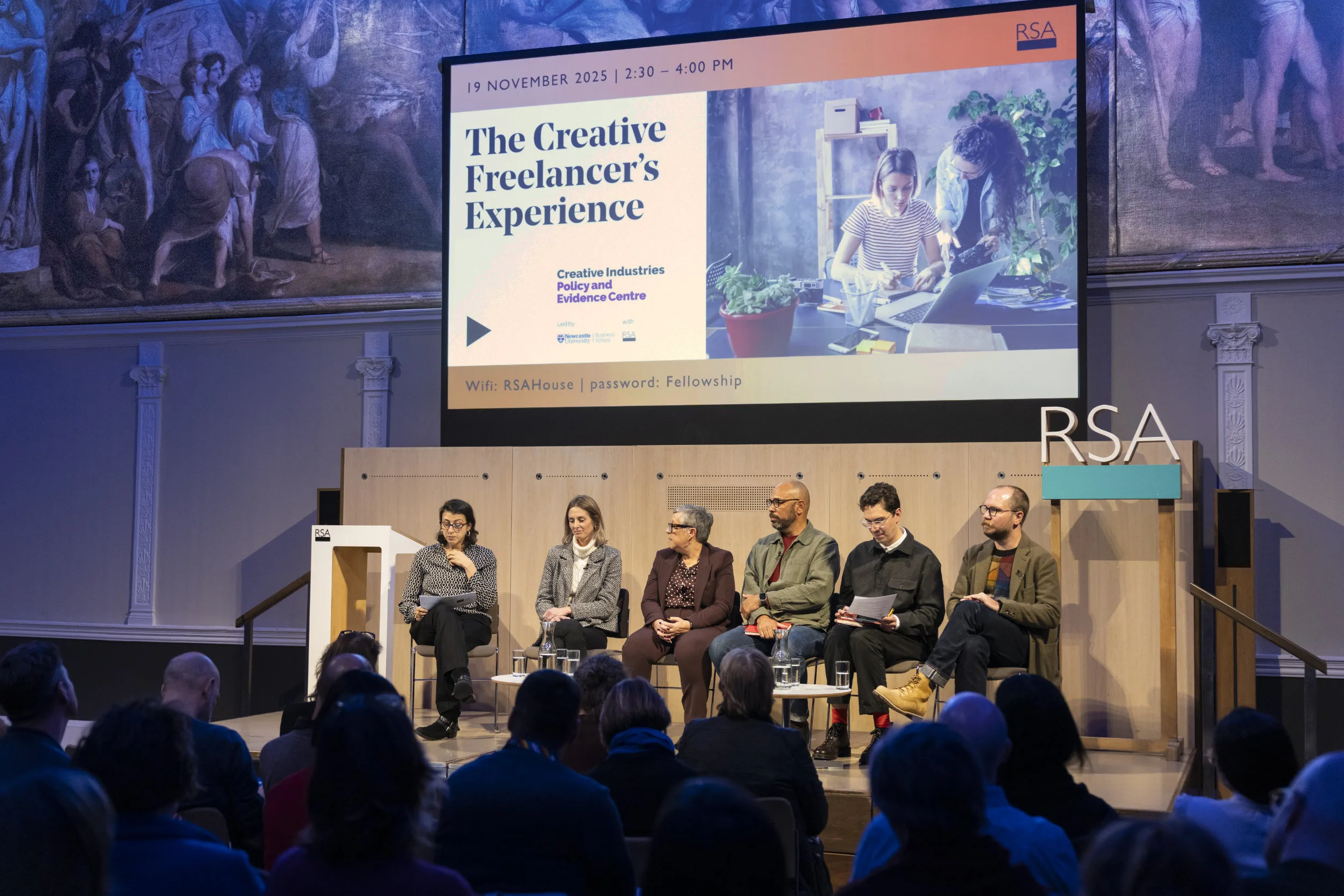
Policy Brief: Creative Freelancers
Evidence, insights and recommendations to support the Government's new Freelance Champions.

Harnessing the growth potential of createch
This insights paper summarises existing evidence on the present opportunities and challenges in crea…
Policy Brief: Creative Industries Employers’ Perspectives on Skills Initiatives: 2025
Overview The Government’s new Industrial Strategy sets a long-term, sector-focused approach to skill…

Policy Brief: Migration in UK Creative Occupations and Industries
Overview The UK’s creative industries are internationally oriented, a fact that’s reflected in its e…

Policy Brief: Arts, Culture and Heritage: Recent Trends in UK Workforce and Engagement in England
Overview Five years after the Covid-19 pandemic, engagement and employment in the arts, culture and …
Policy Brief: Foreign Direct Investment in the UK’s Creative Industries
Read the Policy Brief based on the most recent State of the Nations Report on FDI.

Policy Brief: Insights from the Northern Creative Corridor Workshops Sprint
The Northern Creative Corridor is an initiative aimed at connecting creative clusters across Norther…
Policy Brief: International Trade and the UK Creative Industries
This policy brief examines international trade in the UK creative industries. Drawing on our UK Trad…
Policy brief: Audiences and Workforce in Arts Culture and Heritage
This policy brief uses census data to provide, for the first time, a comprehensive analysis of audie…

Policy Brief: Transitioning to Sustainable Production across the UK Theatre Sector
This policy brief outlines recommendations for transitioning to more sustainable theatre production …

Authors’ Earnings in the UK
This policy briefing sets out areas for possible policy action, proposed by the researchers at CREAT…

Television production, international trade and pressures to consolidate
The UK television production sector is one of Britain’s leading creative export sectors. This briefi…

