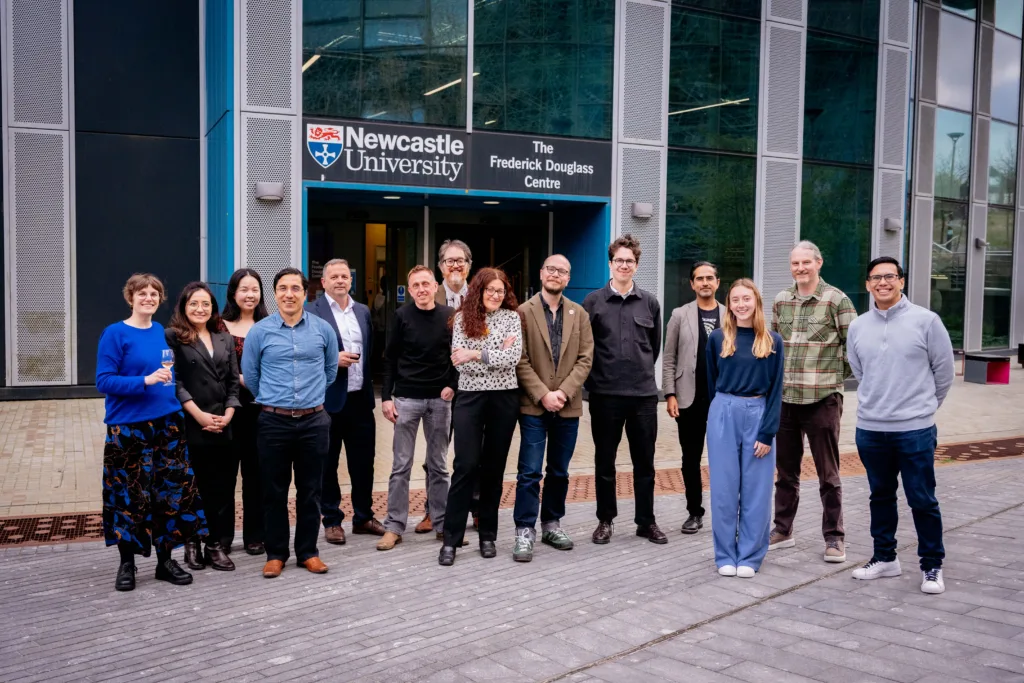
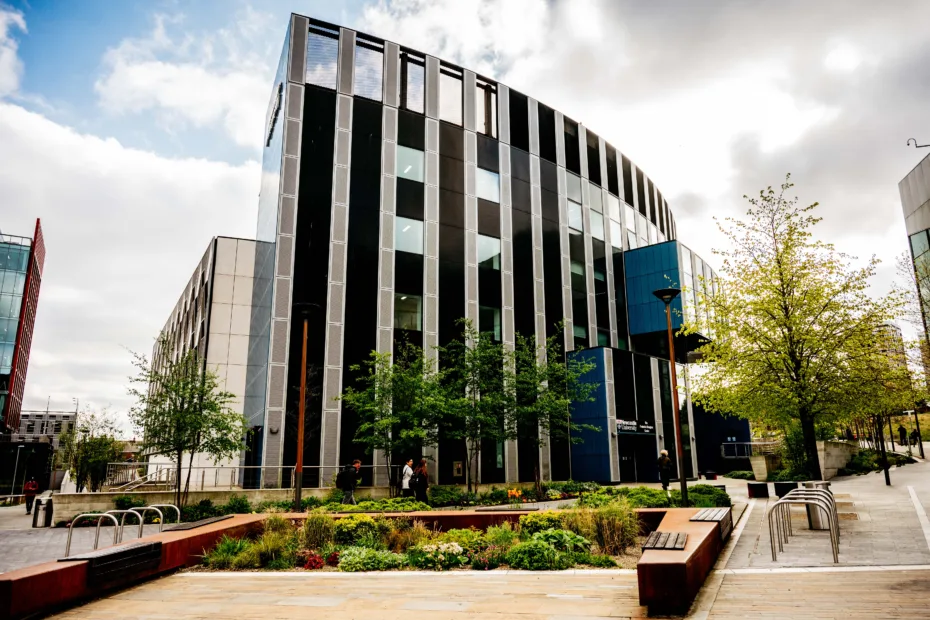
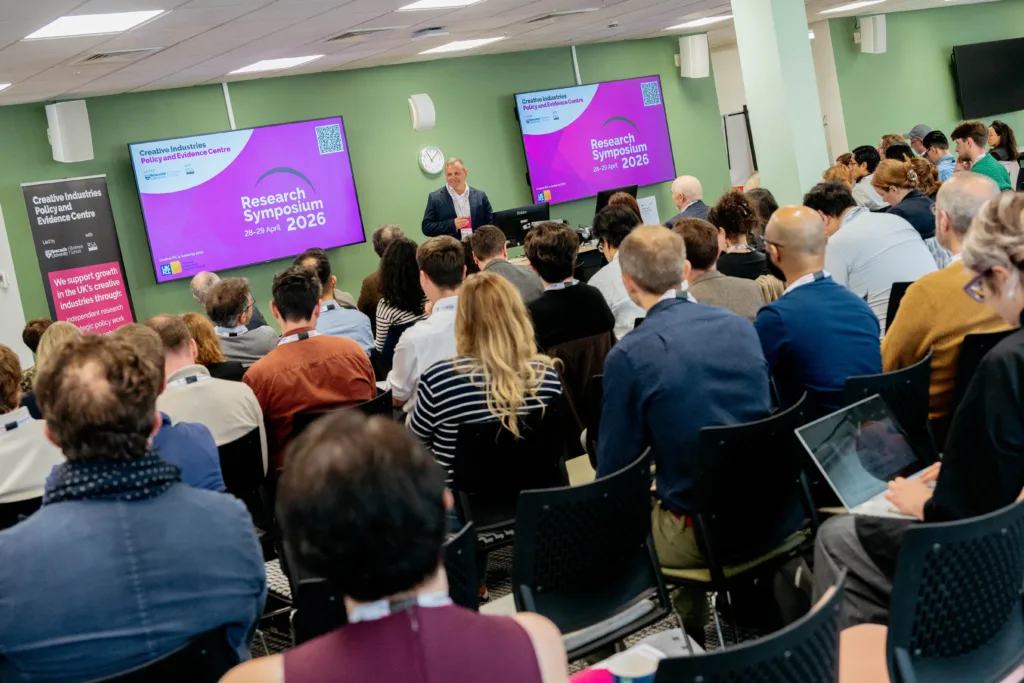
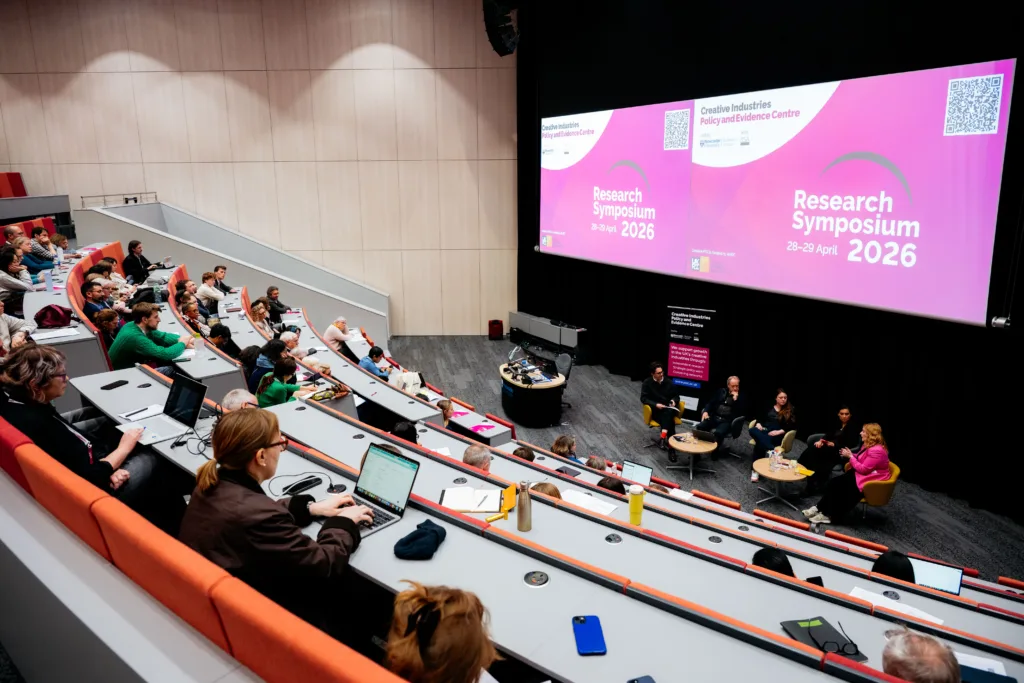
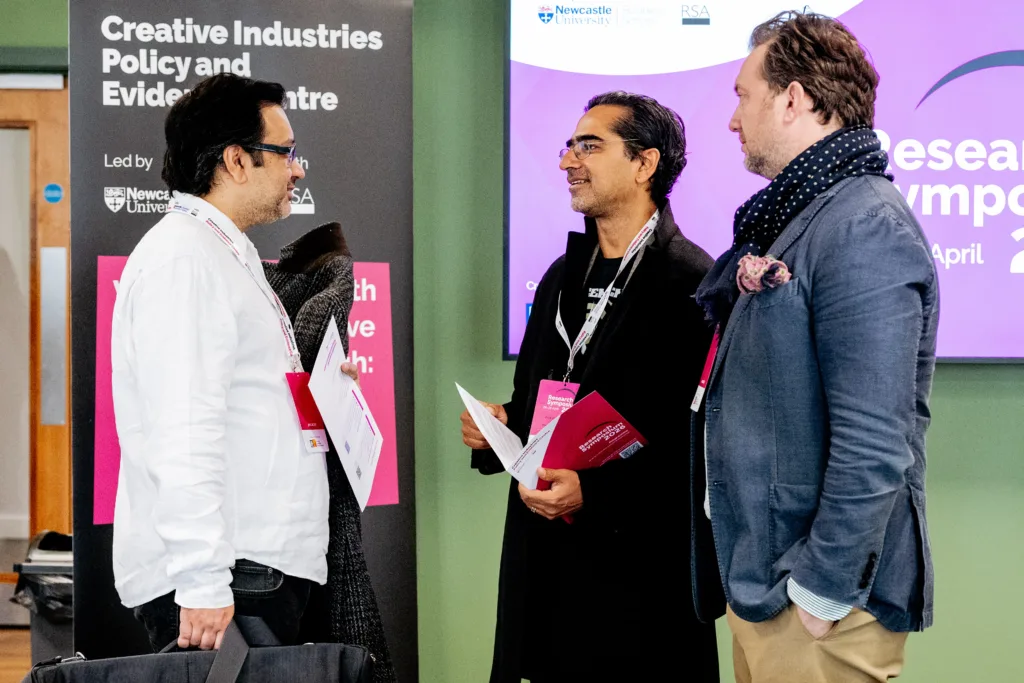
At the end of April, we had the pleasure of welcoming more than 150 delegates from over 10 countries to the North East for the Creative PEC Research Symposium. Bringing people together from across academia, industry, and government, the Symposium provided a forum for discussion and debate on the economics of cultural and creative industries.
The Symposium opened by framing the importance of the North East, and Newcastle University in particular, as a hub for creative industries research and policy. As several speakers noted, the famous Geordie hospitality played its part in setting the tone for the lively and constructive discussions that followed!
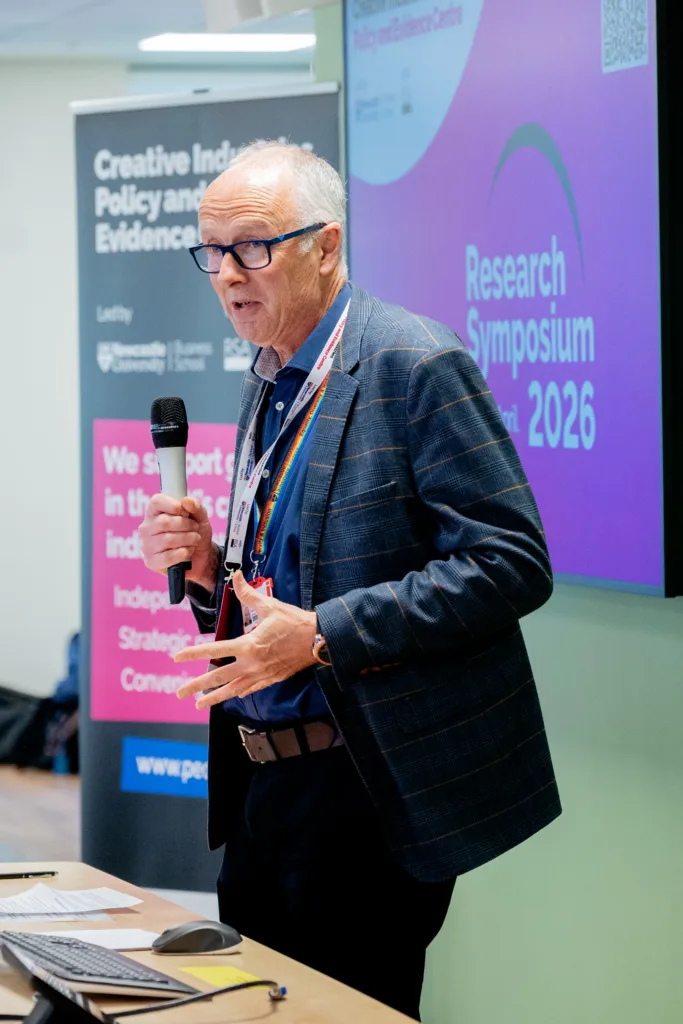
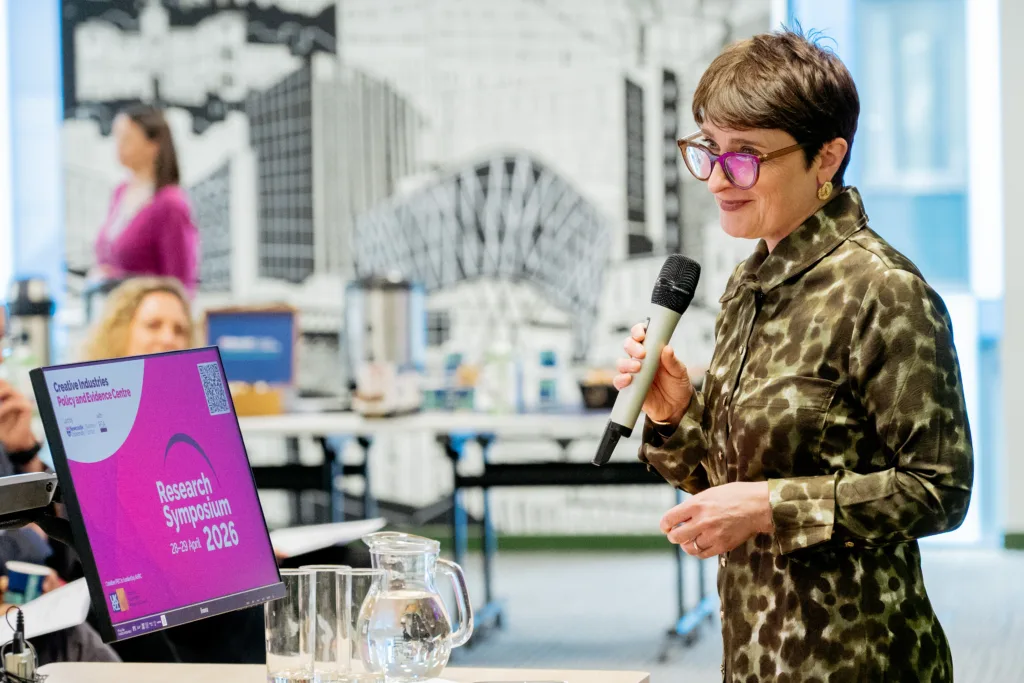
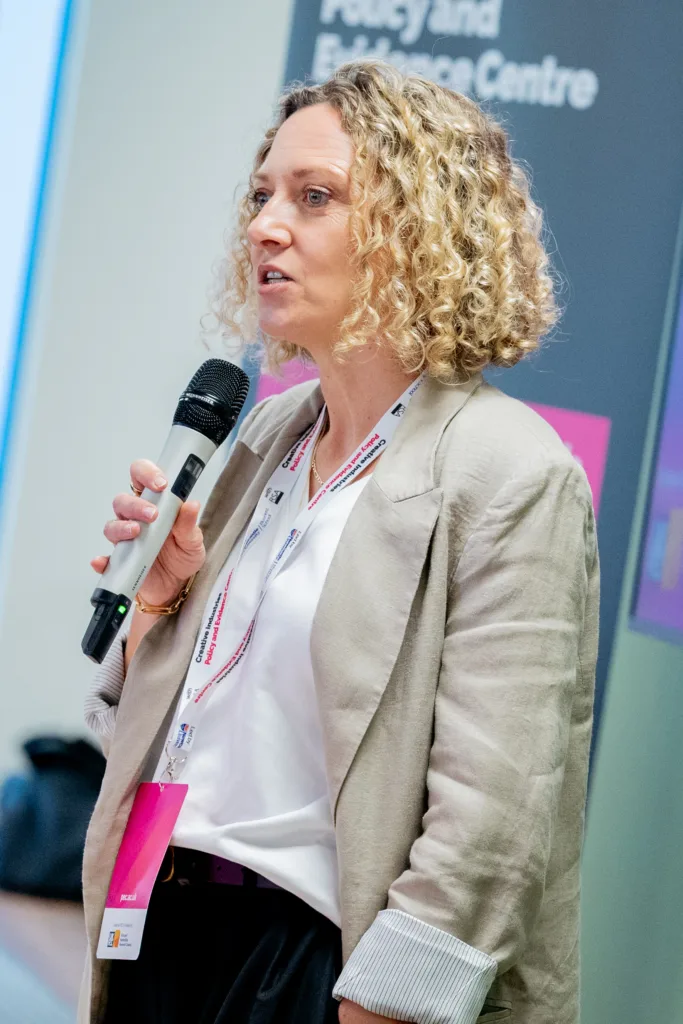
Proceedings were opened with remarks from Giorgio Fazio (Research Director, Creative PEC and Newcastle University), Jo Fox (Pro-Vice Chancellor, Humanities and Social Sciences, Newcastle University), Cathy Kerfoot (Programme Director for Creative Industries, Arts and Humanities, UK Research and Innovation), and Stewart Robinson (Dean of Newcastle University Business School).
Why are the arts important?
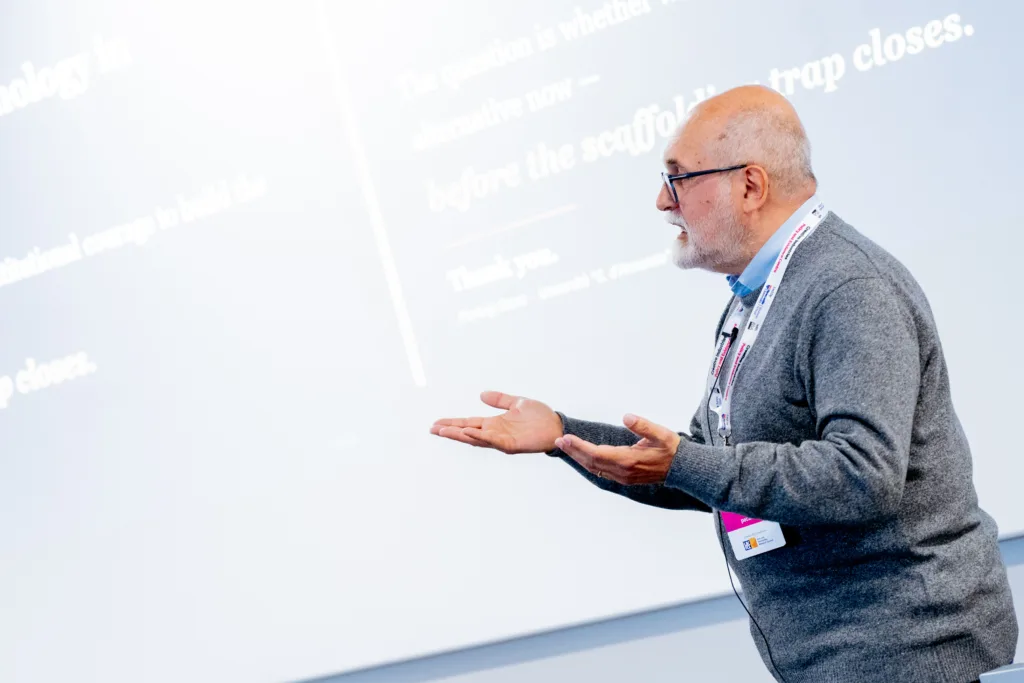
In his keynote speech, Pierluigi Sacco began the day by challenging us to think beyond traditional ‘nudge’ approaches in behavioural policy, making a compelling case for arts-based interventions as a more effective and nuanced policy tool.
He argued that engagement with the arts can reshape how people process ambiguity, build empathy and perspective-taking, and strengthen emotional regulation over time, and so should be treated not as instrumental but as integral to policymaking.
Place, policy and co-creation
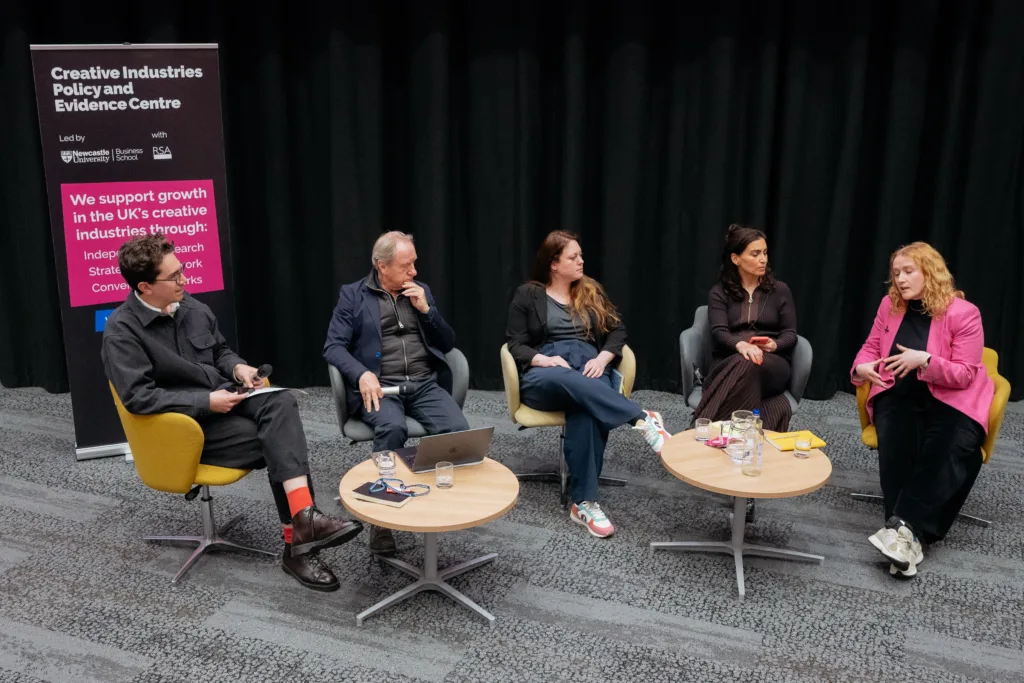
In the policy panel on place-based approaches to creative industries’ growth, chaired by Creative PEC Policy Director Bernard Hay, a key theme that emerged was that ‘place’ is never just about geography but also people, culture, identity, and history.
Discussion also turned to the fundamental issue of how policy is made and who is involved in shaping it. The discussion strongly emphasised the need for earlier alignment between evidence and policy development in order to impart meaningful evidence-led change, and the importance of involving communities directly in the process of policymaking.
The panel included Rachael Wadsworth (North East Combined Authority), Azadeh Fatehrad (Teesside University), Graeme Evans (University of the Arts London) and Martha Bloom (OECD), whose perspectives brought a wide range of institutional and international lenses to the conversation.
What is the impact of AI on creative work?
On day two, Joanna Woronkowicz delivered a keynote that grounded the discussion of generative AI in real labour market evidence from a range of creative professions.
Her findings were particularly striking in showing that adoption and integration of AI tools among artists is shaped less by ethical and policy concerns and more by practical constraints, such as time, financial resources and experience of labour-market shocks such as the pandemic. Rather than displacing creative work, her research suggested that AI is being integrated into existing workflows.
How is the creative industries evidence base evolving?
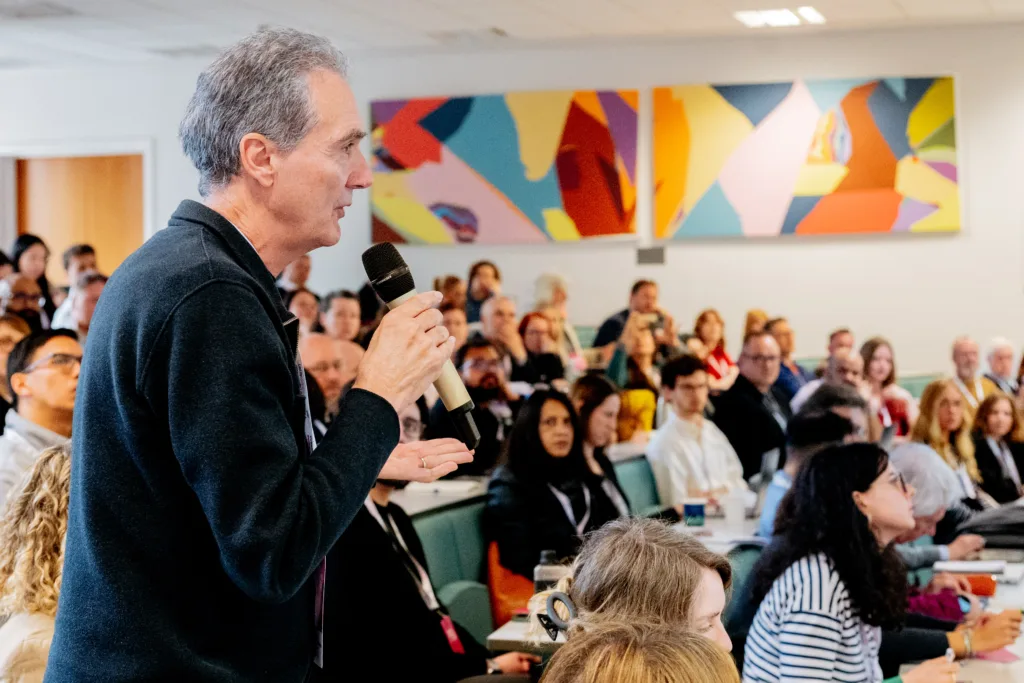
As well as the keynotes and policy panel, a host of parallel sessions across the two days showcased the vitality of creative industries research, spanning a wide range of topics including culture and heritage, R&D and innovation, place, trade, health and wellbeing, EDI, and education, skills and talent. Across both days there were recurring themes, especially regarding the importance of collaboration across sectors and disciplines and the need to further strengthen the evidence base underpinning policy and practice.
As Creative PEC Director Hasan Bakhshi reflected in his closing remarks, the creative industries research landscape has matured significantly in recent years, with the breadth and depth of available evidence now meaning that a lack of data can no longer be used as an excuse for policy inaction. At the same time, he noted that rapid growth in the field has brought increasing fragmentation, making opportunities to convene, connect and share knowledge such as the Symposium all the more important.
What comes next?
The Symposium has already begun to convert these themes into tangible outcomes. New connections have formed and existing relationships deepened from two days of focused discussion. These exchanges continue beyond the event in Creative PEC’s wider research initiatives, such as the development of our Research Fellows Network and the upcoming Research Seminar Series. Watch this space to see how the ideas and partnerships sparked at the Symposium develop.
We are very grateful to the UKRI Arts and Humanities Research Council’s funding for making the Symposium possible, to Newcastle University Business School for hosting us, and to all presenters, panellists, and attendees for their contributions. Our thanks also go to the organising committee: Giorgio Fazio, Tom Cahill-Jones, Cecilia Mereghetti, Sarah Najm, Emily Bullock, and Duncan Todd.
Photos by Thomas Jackson / TyneSight Media.