
In 2020, during the height of the first Covid wave, Innovate UK ran a multi-million pound funding competition, supported by the Treasury, to support business-led innovation projects to respond to the societal and economic disruption caused by the pandemic.
This competition was directly funded by the Treasury and included a number of mechanisms and processes which were new to Innovate UK and enabled them to fund companies at a significant pace and scale greater than they had previously achieved. These included small grants (up to £50K), short projects (up to six months), streamlined application forms, up-front payments and utilising De-Minimis, a state-aid mechanism which has arguably more freedom to operate that standard innovation funding.
These changes allowed Innovate UK’s funding to be more accessible, which was reflected in the number of applications (8,619 in total), more than the total which they had received in the previous year. 865 projects were funded through a competitive process with the applicants having to score 79.7% or more to be funded.
Although there was an increase in applications across every sector there was significant proportional growth in the creative industries. 105 of the funded projects are classified as ‘from and/or supporting the creative industries’. This equates to 12% of all the funded applications. In comparison, Innovate UK’s responsive competitions (Smart, Open, etc.) proportionally fund the creative industries at around 2-4% .
The number of new applicants from the sector was also significant: 77% of these companies had never previously received funding from Innovate UK. It was observed that their appetite and uptake for the non-financial support provided by Innovate UK Edge was also higher than normal, and those who used it noted how useful it had been. Part of this uptake can be attributed to the proportion of companies who were completely new to the Innovate UK support ecosystem, and the lack of business support compared to other sectors.
As the increase in creative industries funded projects is primarily due to the number of new applicants, research was conducted to better understand why they applied. Ten companies who Innovate UK had never previously funded were randomly selected for a short telephone interview.
All of the companies were asked to rank which of the elements of the competition were the most relevant to them. The majority of companies stated that the most significant factor for applying was that the competition was 100% funded and paid in advance.
The organisations interviewed included a charity, incumbents and start-ups across a number of creative subsectors. There were consequently some variations across their responses, which is perhaps to be expected. The other common factor which attracted them to the competition and motivated them to submit a high quality application included the short application form and rapid turnaround process which was appropriate for the size of funding (£50k) on offer and their sector in general.
A notable insight came from an applicant who is a serial entrepreneur originally from the healthcare sector. They claimed that she only explored private funding for their creative business because she thought the public sector only funded life sciences research and innovation.
It’s been nearly 24 months since the competition launched and the impacts of the projects are starting to materialise. An initial evaluation has identified a number of projects in the sector which have directly led to multi million pound investments, which demonstrates an attractive return on investment for UK Plc following the initial funding of £50k.
Success stories include:
- ACS Clothing, who innovated their business model to address the sustainable fashion agenda – subsequently attracting £2.5m of private finance and nearly £1m of public funding.
- Gramrphone, who accelerated the development of their live-audio streaming technology to allow artists all around the world to perform on the world’s largest music platforms.
- Deep Render, who developed their AI based compression for the live streaming market to be integrated on streaming platforms and devices (Smart TVs, etc.).
The insights from this competition led Innovate UK to run a pilot programme the following year. In May of 2021 they launched the ‘Creative Industries Fund Pilot’, which was the first new creative sector specific programme from UKRI in five years. This programme was modelled on the earlier Covid-19 competition but with a greater focus on new applicants and wrapping funding with business support. The scope of the competition was aligned to Innovate UK’s vision for the sector which is:
- Ensure that more value is captured in the UK from our creators
- Protect our market-share from external disruption, as well as position ourselves as net-benefactors of disruption.
- Enabling the whole of the UK to benefit from our sector and leveraging our position to create high value jobs and re-shore more of the supply chain back to the UK.
The pilot has supported over 125 projects, which is the largest cohort of creative companies Innovate UK has ever managed. The portfolio covers every creative sub-sector and demonstrates the ubiquitous nature of the UK’s creative industries by having projects in every region. From Fashion and Textiles in the Inner-Hebrides to Music licensing in the St. Ives bay – the most geographically diverse cohort Innovate UK has managed in a single competition.
The critical mass of projects has also allowed Innovate UK to analyse trends in innovation. For example, the marked uplift in Sustainable Fashion projects, which accounted for 16.5% of the total portfolio and 95% of all the projects in fashion. There were also trends in ‘Trust in Advertising’, ‘Beyond the Platform Economy’ and ‘Capturing value in NFTs’. These insights should be used to inform the next strategic programmes within the sector.
This blog was published as part of the PEC’s spotlight on R&D week which ran between 14 – 18 February 2022
Image credit: Photo by Aditya Chinchure on Unsplash
Related Blogs

11 actions for the cultural and creative industries in the age of AI
A guide to help the cultural and creative industries address the rise of AI, from the GCEC.

Creative Resilience in Times of Crisis
Introducing A Global Agenda for Creative Resilience, an 11-point strategic framework for strengtheni…

Reporting from the Creative PEC Research Symposium 2026
Bringing people together from across academia, industry, and government for discussion and debate on…

Keeping creative options open for everyone
How does creative study allow us to express ideas, shape how we see the world, and contribute to vib…

Coworking spaces as informal skill ecosystems for the creative workforce
How coworking spaces have become an increasingly important component of the creative economy.
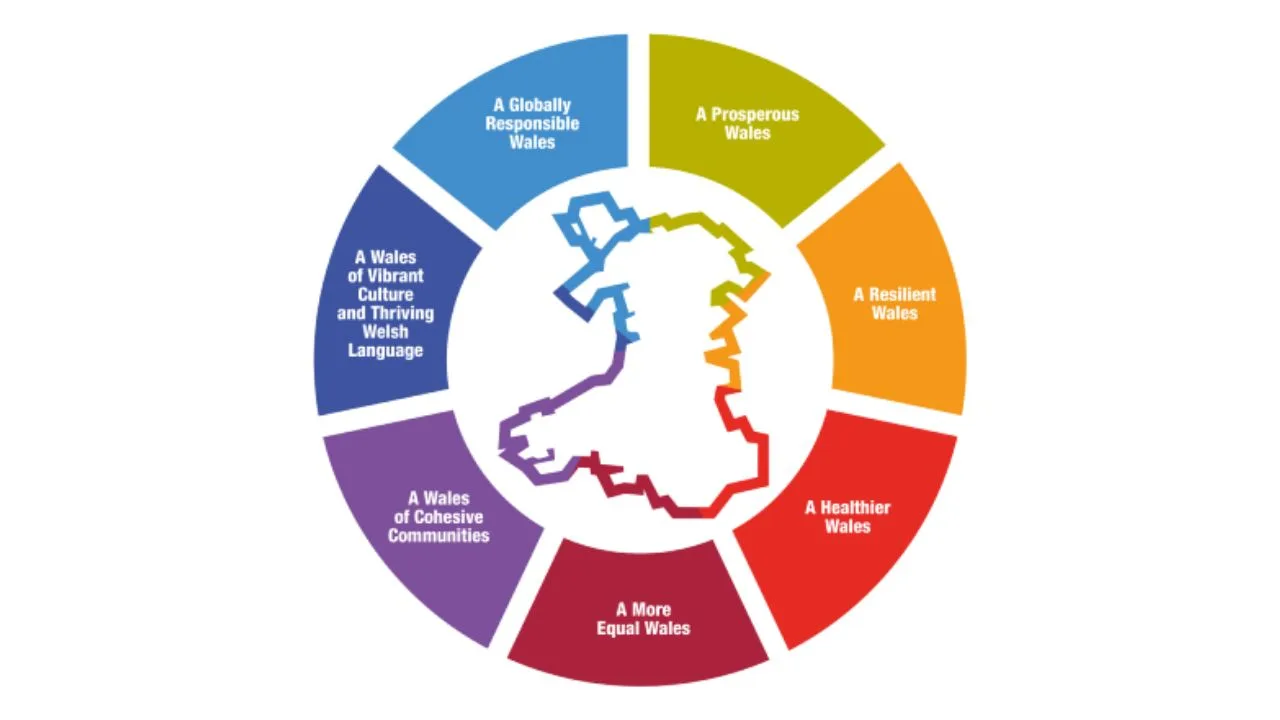
From Wales to the World: Why International Cultural Policy Needs a Future Generations Lens
Can international cultural policy be shaped by focusing on future generations?

10 facts about Creative Industries growth potential
Discover ten key findings from the report 'High-Growth Potential Firms in the UK's Creative Industri…

Why London is investing in Creative Enterprise Zones
London Mayor Sir Sadiq Khan announces £2.2 million in new funding for Creative Enterprise Zones.

Research resources on Creative Clusters
We’ve collated recent Creative PEC reports to help with the preparation of your Creative Cluster bid…

What UK Job Postings Reveal About the Changing Demand for Creativity Skills in the Age of Generative AI
The emergence of AI promises faster economic growth, but also raises concerns about labour market di…

Creative PEC’s digest of the 2025 Autumn Budget
Creative PEC's Policy Unit digests the Government’s 2025 Budget and its impact on the UK’s creative …

Why do freelancers fall through the gaps?
Why are freelancers in the Performing Arts consistently overlooked, unseen, and unheard?
