
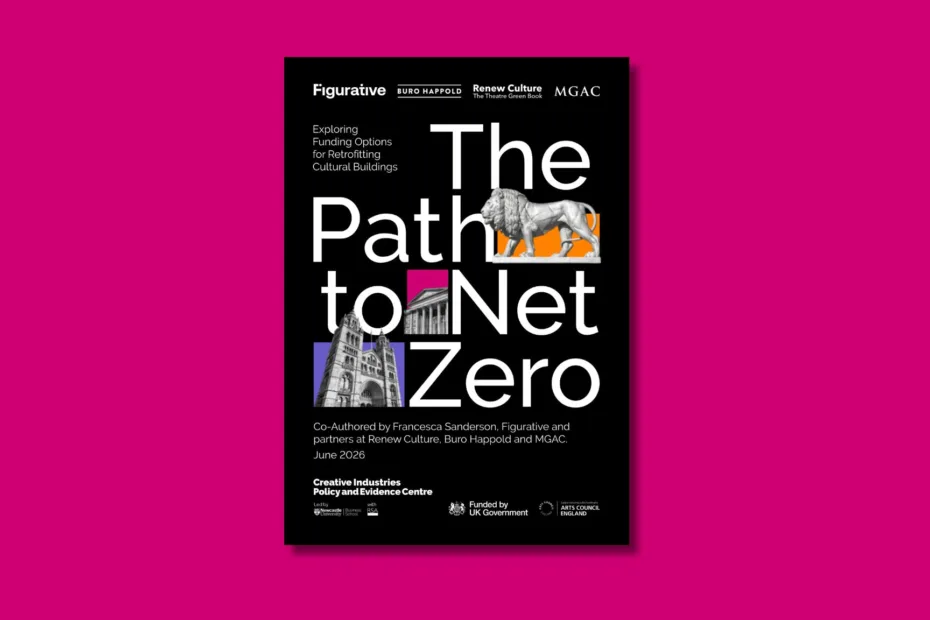
The Path to Net Zero: Exploring Funding Options for Retrofitting Cultural Buildings
Examining the real world energy and cost savings and ROI from cultural retrofitting projects.
Examining the real world energy and cost savings and ROI from cultural retrofitting projects.

This sector-wide study by Creative PEC and Work Advance unveils the current and future skills needs of the creative industries.
This new report demonstrates that the Creative Industries account for almost a tenth of UK firms classified as having ‘high-growth potential’.

A new scoping study on the economic consequences and potential market failures The BFI’s Research and Statistics Unit and Creative PEC, with Games Investor Consulting and Oxford Economics, have published a… Read More »The impact of overseas mergers and acquisitions on UK video games industry

Creative PEC launches new research exploring how the creative industries participate in innovation activities including: R&D, investment, product and service development, environmental benefits and business strategy. The report, produced by… Read More »What can we learn about the innovation performance of the Creative Industries from the UK Innovation Survey?

New research shows innovative tax and benefits policies could transform UK Screen Industry freelancers’ livelihoods. The research reveals that innovative tax and benefits policies could dramatically improve financial security for… Read More »Make Freelancing Pay

This report is a collaboration between Creative UK and the Creative Industries Policy and Evidence Centre (Creative PEC). It is based on a survey of 896 firms from all creative… Read More »Unleashing Creativity: Fixing the Finance Gap in the Creative Industries

The UK creative industries have been an economic powerhouse for over two decades, contributing £125 billion to the economy in 2022 and supporting nearly 2.4 million jobs. However, this growth… Read More »Beyond growth: promoting inclusive development of creative clusters in the UK

Towards multi-regional creative industries satellite accounts In today’s ever-evolving economic landscape, policymakers are increasingly recognising the potential of creative industries to drive growth, innovation, and export opportunities across various sectors.… Read More »Improving economic statistics in the creative industries

This report identifies a burgeoning movement of investing for impact in the cultural and creative sectors globally, emerging at the precise moment that the sector urgently needs to examine new… Read More »Impact Investing in the Cultural and Creative Sectors: Insights from an emerging field

Young people can face significant barriers to achieving their full potential in UK society. Disparities in educational and employment outcomes between disadvantaged young people and their peers are well-evidenced and… Read More »Improving young people’s access and progression in work in film, TV and games

This comprehensive new report provides evidence and commentary to highlight the key features of the environment facing the creative industries and business models over the next 5 to 10 years,… Read More »Tomorrow comes today
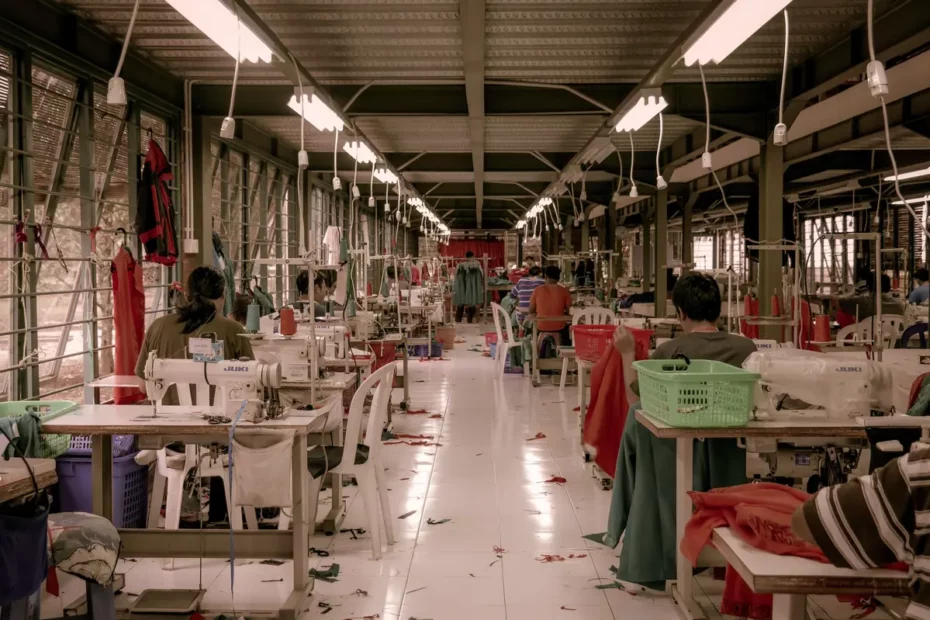
This discussion paper presents findings from a study which analysed the impact of climate change, COVID-19, and Brexit on the drivers and factors underlying the supply chain relocation strategies of… Read More »Fashion MSMEs confronting climate change, COVID-19 and Brexit
Download and read the State of Creativity in Arabic قم بتحميل وقراءة التقرير باللغة العربية Thanks to our partners at the British Council, you can now read the State of Creativity… Read More »The State of Creativity

The near future of the creative industries will be a networked shift Digital tools and processes are already enabling creative practitioners and audiences to reconfigure their outputs and interests in… Read More »The networked shift: A creative industries foresight study

The UK’s departure from the EU has changed the way that British firms trade and work with Europe. Brexit has introduced new barriers to the single market, and through the… Read More »Post-Brexit migration and accessing foreign talent in the Creative Industries

The Good Work Review is the first examination of job quality across the entire creative industries. The Review is based on 40 separate indicators, from evidence submitted by 120 organisations,… Read More »The Good Work Review

This report makes for a timely contribution for UK policymakers as they revisit growth priorities for the creative industries. Createch is a term that has been used broadly to characterise… Read More »Understanding createch R&D

From film credits to library catalogues, the creative industries are constantly, passively generating rich textual data. Could this data be used to shed new light on societal challenges? At Nesta,… Read More »Exploring societal challenges through library data

Ahead of COP 27, this landmark new report brings together for the first time a sector by sector overview of the creative industries, and the huge amount of activity taking… Read More »Creative industries and the climate emergency

More targeted support could unleash the potential of Rural Creative Enterprises It is well documented that creative industries are clustered in urban areas. This leads to a possible policy bias… Read More »Mapping and examining the determinants of England’s rural creative microclusters

The economic geography of the UK is highly uneven, with many of the largest clusters concentrating in the greater South East of England and some large metropolitan areas in the… Read More »Supporting the Creative Industries: The impact of the ‘Preston Model’ in Lancashire

The government has committed to increasing the amount of public money spent on research and development (R&D). Historically, R&D funding has gone towards economic sectors such as science, health and… Read More »The art of R&D

Creative education, which covers a wide array of subjects, from art and design, to media, dance and music, plays a crucial role in preparing the next generation of innovative workers.… Read More »Enhancing creative education

Createch is an emerging field that combines technology and creativity in novel ways. This report is a foundational piece of research that examines where createch businesses are in the UK,… Read More »Createch activity in the UK

This report concludes phase 2 of the PEC’s ‘Class in the Creative Industries’ programme. Led by PEC researchers at Work Advance, the University of Edinburgh, and the Work Foundation, and… Read More »Social mobility in the creative economy: Rebuilding and levelling up?

Future Screens NI and levelling-up in a pandemic environment Future Screens NI is one of nine creative clusters in the Arts and Humanities Research Council’s Creative Industries Clusters Programme, of which… Read More »Cultural brokerage and creative clusters

This is the second report from the Creative Radar series, by PEC researchers at the University of Sussex, and funded by the AHRC. The authors analysed data from a survey… Read More »Creative Radar 2021: The impact of COVID-19 on the UK’s creative industries

Our new research, supported by ScreenSkills with BFI funding, calls for change in the Screen sector Read the summary of the report The Screen Industries are a vital and vibrant… Read More »Screened out: Tackling class inequality in the UK’s screen industries

From presence to prominence: How can computer vision widen evidence base of on-screen representation There are two big initiatives in the UK regularly collecting evidence on diversity across different demographics… Read More »Part one: Gaps in the evidence base

From presence to prominence: How can computer vision widen evidence base of on-screen representation We present a conceptual framework of representation measurements, focusing on representation on-screen. Off-screen inclusion (e.g. commissioning of… Read More »Part two: A framework for measuring on-screen representation

From presence to prominence: How can computer vision widen evidence base of on-screen representation The final part of this blog series shows two illustrative examples of measuring character prominence in… Read More »Part three: An illustrative demo measuring prominence of TV characters

Explore the research series A series about improving issues of diversity in the characters that we see on our screens The UK screen industry has a diversity (specifically, representation) problem… Read More »Using computer vision to improve on-screen representation

A major contribution of new guidance, evidence and research on the economic value of culture and heritage Visiting a free museum, walking past a historic building, going to a theatre:… Read More »Measuring the economic value of cultural and heritage sites

Major urban centres are the sorts of places we would expect to find creative businesses clustered together. Yet go beyond London’s Shoreditch, Manchester’s Northern Quarter, or Edinburgh’s Cowgate, and you… Read More »Creative radar: Mapping the UK’s creative industries

Graduate motivations and the economic returns of creative higher education inside and outside the creative industries In recent years, several studies have attempted to quantify the economic value of higher… Read More »For love or money

Understanding creative industries growth trends from 1991-2018 by mapping the geographical concentration and patterns.

AI and the creative industries Artificial Intelligence (AI) is the goal of developing machines with intelligent capabilities, such as pattern recognition, conversation and, ultimately, general intelligence itself. AI has seen… Read More »AI and the Creative Industries: The art in the artificial

Looking back at the rise of streaming Over the past decade, digital technologies have brought huge changes in how we consume culture, from being able to re-watch our favourite films… Read More »Streaming culture

Using data science to understand the arts and cultural charities sector in England and Wales Charities affect all walks of life – they care for underprivileged people; they provide spaces… Read More »Charities speak

Authors: Heather Carey, Rebecca Florisson, Professor Dave O’Brien, Dr Neil Lee It was recently suggested that the pandemic poses ‘the biggest threat to the UK’s cultural infrastructure, institutions and workforce in a generation’… Read More »Getting in and getting on: Class, participation and job quality in the UK’s Creative Industries

Worldwide exports of creative goods exceeded 500 billion USD in 2015, with a 150% increase since 2002. In the UK, the creative industries have become an increasingly international sector in… Read More »12 facts about the UK’s international trade in creative goods and services

A study on the impact and use of technology in the arts and culture sector, from Arts Council England and Nesta. The study provided detailed insight on digital for arts… Read More »Digital Culture 2019

A common finding in studies on the future of work is that employers will increasingly demand digital skills and creative skills. Some studies go further and suggest that the sweet spot will… Read More »The creative digital skills revolution

This report details the results of a survey of employers commissioned by the Creative Industries Council (CIC) from December 2017 to January 2018. The CIC survey ‘piggybacked’ on the Department… Read More »The migrant and skills needs of creative businesses in the UK
Measuring gender imbalances in reporting on the creative industries The media’s reporting of women in the creative industries has changed markedly in recent years. Not only has there been a… Read More »She said more
How can it be managed and grown? This report brought together views from Nesta on better ways of mapping and measuring public value. It built on work Nesta has done… Read More »Public Value

At a time when all jobs, whether in a coffee shop or a bank, can seemingly be described as creative, you’d be forgiven for thinking the word had lost all… Read More »Creativity and the future of skills

This report by Nesta and Simetrica looked at the value that users (residents and visitors) and non-users obtain from historic cities and their cathedrals. The researchers used a technique known… Read More »The Economic Value of Heritage
In this paper the authors considered how the innovation processes used by creative industries businesses compare with those used in other sectors. The analysis used data from the Department for… Read More »What can we learn about the innovation performance of the creative industries? (2018)
This report used web data to identify and map the organisations developing and applying new technologies in the UK. This report, commissioned by Immerse UK with funding from Innovate UK,… Read More »The immersive economy in the UK
This paper was intended to serve as a prompt for Arts Council England’s consultation activity over the forthcoming months, with the intent of provoking a conversation with arts and cultural… Read More »Experimental Culture: A horizon scan for the arts and culture sector
This report used official, open and web data to map the creative industries in the UK, their evolution, contribution to local economic development, the strength of their support ecosystems –… Read More »Creative Nation
This report mapped out how employment was likely to change in the future – including the implications for skills – and anticipates a number of new occupations. The study challenged… Read More »The Future of Skills: Employment in 2030
An Arts Council England and Nesta’s study of technology usage and impact among arts and culture organisations. The study provides detailed insight on digital for arts and cultural organisations to… Read More »Digital Culture 2017
Trends impacting on US and UK employment in 2030 The drivers of change shaping the future of US and UK employment and the need for different skills. This slide deck… Read More »The Future of Skills
Understanding how video games playing affects individuals This study addressed the important and recurring question of whether playing video games is detrimental to the socio-economic development of a person. Publication… Read More »Did you really take a hit?
Classification, Measurement andLegitimation of the Creative Economy This report reviewed how policymakers can use data to measure and support the growth of creative clusters. This report illustrated how measurement of… Read More »Putting Creativity on the Map
This report argued that to support the growth of the creative industries, we need to ensure that the UK is able to access talent from outside of Europe. Publication date:… Read More »Skilled migration and the UK’s creative industries
This report, in partnership with Creative England, used the latest data and official definitions to map the creative industries in the UK. The goal was to provide a data resource… Read More »The Geography of Creativity in the UK
This report argued that new DCMS statistics on the cultural sector, alongside the creative industries estimates, will create an important opportunity to revisit the scope of cultural policy in the… Read More »Cultural policy in the time of the creative industries
The Economic Returns to Combining Arts and Science Skills This report explores the performance of businesses with fused skills – thosecompanies that fuse science and arts skills. It uses official… Read More »The Fusion Effect
This report measured employment in the creative economies of the US, Canada and the UK. It provided consistent statistics on the US and Canadian creative economies in comparison to the… Read More »Creative Economy Employment in the US, Canada and the UK
This report was by Nesta and Tech City UK and produced in partnership with GrowthIntel. It was the most comprehensive analysis of the UK’s digital tech industries to date, and… Read More »Tech Nation 2016
This report compared the size and growth of the EU’s creative industries on a consistent basis. It also provided consistent statistics for the creative economies (employment in creative industries and… Read More »Creative economy employment in the EU and UK: A comparative analysis
UK businesses need the right analytic skills to thrive in the big data era. This report identified what these skills are, and the situation in the labour market for data… Read More »Skills of the Datavores: Talent and the data revolution
Using social media data to understand the impact of a conference on social networks The research used social media data from Twitter to develop a methodology for understanding the effects… Read More »The Net Effect

How social media platforms can help UK publishers understand their market in China In this paper, the authors explored how British publishers and writers can negotiate some of the market… Read More »Found In Translation
Applying RCT+ to the case of Creative Credits In this paper the authors assessed the Randomized Controlled Trial plus (RCT+) approach through an evaluation of Creative Credits – a UK… Read More »Assessing an experimental approach to industrial policy evaluation
This paper looks at why the UK needs one million new creative jobs by 2030 and offers five sets of policy recommendations for government to achieve this. Publication date: 21… Read More »The creative economy and the future of employment
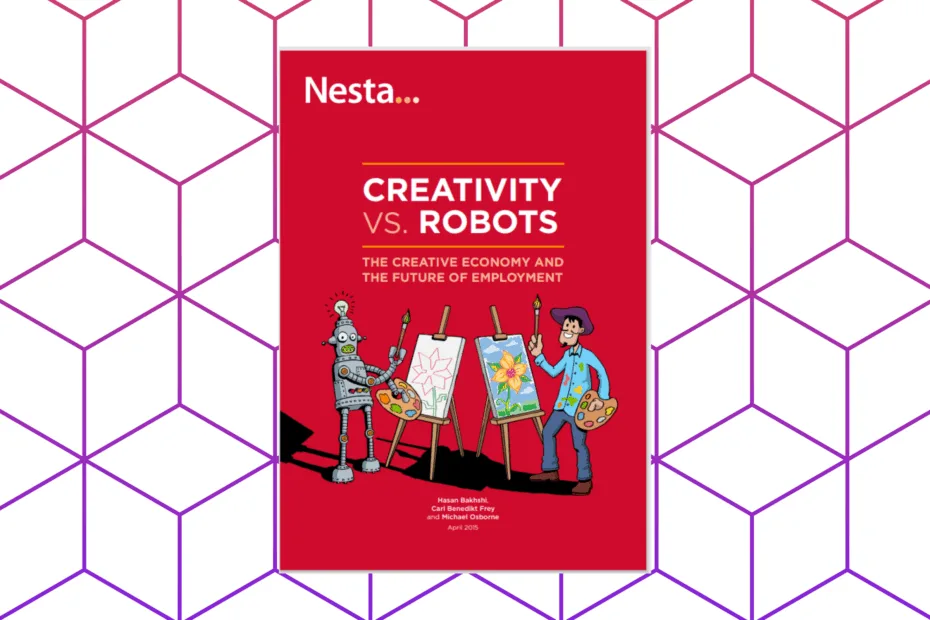
This report explored future automation and creativity in the UK and US workforces and found that creative jobs will be much more resistant to automation than most other jobs. These… Read More »Creativity vs Robots
This report was the first systematic analysis of employment in the UK’s creative and high-tech economies. It analysed their size, growth and distribution across the country. The report showed that… Read More »Geography of high tech and creative economies 2015
This report took a big data approach to measure and map the UK games industry and track its evolution over time. The analysis revealed a games industry which is larger… Read More »A Map of the UK Games Industry
An econometric analysis of the relationship between arts and cultural clusters, wages and the creative economy in English cities In this paper, the authors built an econometric model that explores… Read More »Capital of Culture?
Estimating the effect of data and online analytics on firm performance This paper used a survey of data activity for 500 UK firms which were commercially active online to quantify… Read More »The analytical firm
Making money work harder for the arts This report showed how a portion of arts funding could be reinvented, making use of new methods that would bring in additional finance… Read More »The New Art of Finance
An Application to London’s National Theatre The authors used data for the UK’s early National Theatre (NT) Live broadcasts to conclude that live broadcasts generated greater, not fewer, audiences at… Read More »Estimating the Impact of Live Simulcast on Theatre Attendance
How data and online analytics affect business performance This briefing paper describes the background, data, method and findings of an analysis of the link between data activity and business performance.… Read More »Inside the Datavores
Adjusting the R&D Tax Credit:boosting innovation in theUK video games industry The UK is home to a renowned video games development industry and is a place where global publishers have… Read More »The Innovation Game

This landmark report set out how the UK can be transformed into the world’s leading talent hub for video games and visual effects. Publication date: 22 October 2013
This report examines the results of a pilot study, which used a method of evaluation called randomised control trials (RCTs), to see if a popular business support scheme called Creative… Read More »Creative Credits: A randomized controlled industrial policy experiment
The manifesto set out a 10-point plan to bolster the creative industries, one of the UK’s fastest growing sectors. Publication date: 30 October 2013
This report presented a new way of classifying the UK’s creative industries, and highlighted a number of problems with the current government definition. The paper argued that, despite its strengths,… Read More »A Dynamic Mapping of the UK’s Creative Industries
This report looked at how only a small minority of UK businesses use data analysis despite the significant benefit it brings. A business survey by Nesta showed how a small… Read More »Rise of the datavores: how UK businesses can benefit from their data
Crossing the River by Feeling for Stones UK creative industries have yet to take advantage of China’s growth. This paper looked at the barriers to doing business in China, and… Read More »Crossing the River by Feeling for Stones
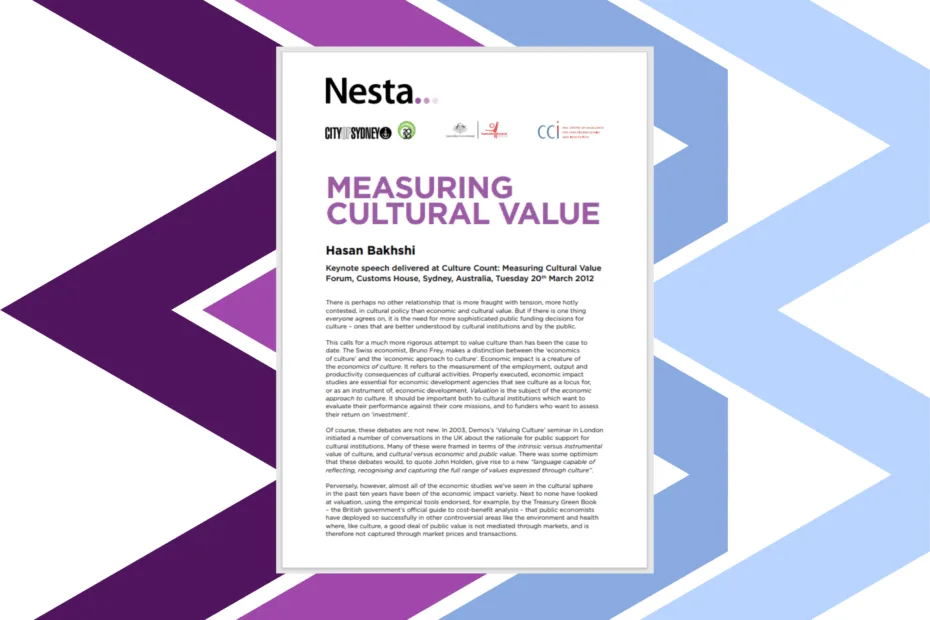
This paper was based on a speech by Hasan Bakhshi, and makes the case for more rigorous valuation studies of cultural institutions. The speech was delivered at Culture Count: Measuring… Read More »Measuring Cultural Value
This working paper looked at the short-term impact of the Creative Credits pilot scheme which operated in the Manchester region from 2009 to 2010. Publication date: 04 May 2011
This paper proposed a new model for innovation policy, which supports the generation and exploitation of new ideas. Innovation policy has desirable effects distinct from those sought by industrial policy:… Read More »State of Uncertainty
A guide to creative credits A Guide to Creative Credits described a new model for supporting innovation and growth within small to medium enterprises (SMEs) through knowledge transfer from creative… Read More »A Guide to Creative Credits
This report attempted to map the UK’s creative clusters and makes a case for a new approach to local economic policy. The study adopted the concept of creative clusters as… Read More »Creative Clusters and Innovation
An economic analysis of innovationin arts and cultural organisations This report tackled the question of how cultural organisations can find ways to innovate in the tightest funding environment they’ve ever… Read More »Culture of Innovation

Digital innovation in the performing arts The researchers conducted an in-depth research study on the two National Theatre Live pilots that were broadcast in 2009 – Phèdre on 25th June… Read More »Beyond Live
Project finance and video games development in the UK This briefing investigated the value of external project finance to the video games sector, and suggested ways of encouraging it. Publication… Read More »The Money Game
A Survey on the impact of a tax credit for cultural video games in the UK development sector Time to Play looked at the potential impact of a tax credit… Read More »It’s time to play by Games Investor Consulting
Fifth generation innovation, behavioural constraints, and the role of creative business – considerations for the NESTA innovation vouchers pilot This research set out an argument that behavioural biases and habits… Read More »Nudging Innovation
This paper investigated the role that arts and humanities research plays in the innovation system. This research suggested innovation flourishes when there is a strong knowledge base combined with a… Read More »Arts and Humanities Research and Innovation
How fine arts graduates contribute to innovation This report gave insights into how fine arts graduates contribute to innovation in the creative industries and beyond, and what policymakers can do… Read More »The art of innovation
Mapping the creative economyin the United Kingdom This report argued for a nationwide strategy to put entrepreneurship at the heart of education for the creative industries. There have been renewed… Read More »Beyond the creative industries
Do the creative industries supportinnovation in the wider economy? This report presented the results of research into the role of the creative industries in stimulating and supporting innovation in the… Read More »Creating Innovation
The economic performance of the UK’s creative industries This analysis by The Work Foundation and NESTA researchers puts at the heart of the UK economy scriptwriters, computer programmers, designers and… Read More »Staying ahead