Do creative industries generate multiplier effects? Evidence from UK cities 1997-2018
A paper examing the long-term impacts of the creative industries on surrounding urban economies
A literature review & policy implications of the impact of the Capital of Culture on local economies
The UK Government’s ‘Levelling Up’ agenda aims to address regional disparities in economic prosperity and the impact these differences have on “people’s lives through their pay, work opportunities, health and… Read More »When policy meets place: ‘Levelling Up’ and the culture and creative industries
Future Screens NI and levelling-up in a pandemic environment Future Screens NI is one of nine creative clusters in the Arts and Humanities Research Council’s Creative Industries Clusters Programme, of which… Read More »Cultural brokerage and creative clusters
This is the second report from the Creative Radar series, by PEC researchers at the University of Sussex, and funded by the AHRC. The authors analysed data from a survey… Read More »Creative Radar 2021: The impact of COVID-19 on the UK’s creative industries
The ‘Preston Model’ of Community Wealth Building (CWB) is an innovative policy intervention that ensures that local growth benefits local communities. A key component of the Preston Model is changing… Read More »Driving local growth: Lessons from the Preston Model
This is in part because of the economic importance of the sector: one in eight UK businesses are part of the creative industries, and together they contributed almost £116 billion… Read More »Creative places: Growing the creative industries across the UK
A recording of Noah Askin’s fascinating talk on gender and creativity in music In this talk, Noah Askin describes his research looking at the relationship between gender and creativity. Noah… Read More »Gender differences in musician creativity
Creative technologies (“CreaTech”) will play an increasingly big role driving innovation and growth in the creative industries. The pandemic has only accelerated investment and interest in CreaTech, particularly in culture,… Read More »Mapping the R&D landscape for creative technologies


A summary of the data and blogs published as part of our COVID-19 digital consumer survey tracker Summary of the project The PEC partnered with the Intellectual Property Office (IPO)… Read More »Cultural consumption in the UK – data and analysis from the six month study
This paper provides policymakers, academics, and creative industry organisations with one of the first analyses of how much creative industries organisations are investing in R&D and engaging in innovation activities. … Read More »R&D, design and innovation: Examining the links in the creative industries
A discussion paper examining the emerging field of platform regulation in the UK
This policy brief is designed to accompany the Discussion Paper,The Emergence of Platform Regulation in the UK: an Empirical-Legal Study. Both this brief and the Discussion Paper will be vital reading… Read More »The Regulation of Online Platforms: Mapping an emergent regulatory field
The Covid-19 crisis has highlighted the lack of available data on the self-employed and freelance workforce, and this gap is particularly acute in the Creative Industries. Although well documented nationally this gap… Read More »Plugging the Data Gap: Freelance Workers in the Creative Industries


Recovery of creative sector: climate change, post-Brexit opportunities & business model innovation New report from the Creative Industries Policy and Evidence Centre shows the scale of class exclusion in the… Read More »Our second call for commissioned research projects
One of the defining features of the creative industries is a high reliance on freelancers whether that is in film, design, tech or the arts. 32% of the creative industries workforce… Read More »Freelancers in the Creative Industries
The role, contribution and challenges of creative freelance work The creative industries are incredibly diverse, and include a very wide range of occupations and businesses, from fashion or interior design,… Read More »Creating value in place
Insights from our Industry Champions: in partnership with the Centre for Cultural Value At the end of March 2021 we consulted a panel of our Industry Champions to gain a deeper… Read More »Recovery and growth for creative freelancers: during and post-pandemic
Previous PEC research undertaken in partnership with the Centre for Cultural Value shows how the creative workforce has been hit hard by the coronavirus (COVID-19) pandemic. In particular, that job losses… Read More »How differently has the creative workforce fared under COVID-19?
An analysis of 45 years of data from the Film Bang directory COVID-19’s effect on the creative industries has highlighted some of the challenges associated with freelance models of creative… Read More »The challenges facing freelancers in Scottish Film and TV
This discussion paper feeds into our wider research on freelancers, considering the employment conditions and wages of freelance musical theatre performers. The paper compares the employment situations of musical theatre… Read More »Comparative analysis of pay and conditions: London’s West End and New York’s Broadway
Two weeks of the latest research and policy to help support creative freelancers Almost one third of the creative industries workforce is made up of freelancers (in comparison to 16%… Read More »One Size Can’t Fit All: A Fortnight of Research and Policy on Creative Freelancers
On February 10th the House of Commons Treasury Committee published the latest report of their inquiry into the economic impact of coronavirus. Their June 2020 report focused on the gaps in support for… Read More »One size can’t fit all
This blog is based on the Freelancers in the Dark Interim Report #1 which was published on Thursday 6th May 2021 and draws on a nationwide survey with 397 respondents. UPDATE: The completed… Read More »Freelancers in the Dark
Our new research, supported by ScreenSkills with BFI funding, calls for change in the Screen sector Read the summary of the report The Screen Industries are a vital and vibrant… Read More »Screened out: Tackling class inequality in the UK’s screen industries
New study looks at issues of class diversity in Screen workforce & calls for change in the sector 22nd April 2021 – New research(1) into class diversity in the Screen… Read More »Press release: Class inequalities in the UK’s Screen Industries: New research shows only one in four Screen workers are from working-class backgrounds
Everything PEC has published on Covid-19 over the last 12 months A summary of everything that we have published about COVID-19 and the impact of lockdown and the pandemic on… Read More »PEC and COVID-19: all our published work to date
The creative industries have been severely impacted by the COVID-19 crisis. Over the past months our International Council has provided us with insight into different challenges, experiences, and sources of inspiration found… Read More »How the pandemic is impacting creative sectors around the world
While the dreaded no-deal scenario did not materialise when the UK left the EU single market and customs union in January 2021, many UK businesses are struggling to deal with the new… Read More »The Brexit shock in the UK’s fashion and textile industry
Yesterday, the Government published the Integrated Review, a survey of the UK’s foreign policy and national security. The Review includes commitments to push for economic and political openness, to act as… Read More »Response to the Integrated Review: A new era of soft power?
From presence to prominence: How can computer vision widen evidence base of on-screen representation There are two big initiatives in the UK regularly collecting evidence on diversity across different demographics… Read More »Part one: Gaps in the evidence base
From presence to prominence: How can computer vision widen evidence base of on-screen representation We present a conceptual framework of representation measurements, focusing on representation on-screen. Off-screen inclusion (e.g. commissioning of… Read More »Part two: A framework for measuring on-screen representation
From presence to prominence: How can computer vision widen evidence base of on-screen representation The final part of this blog series shows two illustrative examples of measuring character prominence in… Read More »Part three: An illustrative demo measuring prominence of TV characters
Explore the research series A series about improving issues of diversity in the characters that we see on our screens The UK screen industry has a diversity (specifically, representation) problem… Read More »Using computer vision to improve on-screen representation
Using online museum collections to study the design of everyday objects A little greyer? We tracked the colour of objects overtime and found a substantial rise in the use of… Read More »A little greyer and a bit more rectangular?
Our response to the 2021 Budget The PEC’s response to the 2021 Budget The creative industries – from film, to fashion, art, advertising, games, design and more – are a… Read More »Response to the 2021 Budget: R&D, migration, skills and levelling-up
What R&D in the arts, humanities & social sciences looks like in a business setting, and why it matters This policy briefing is based on research which starts from two… Read More »Business R&D in the arts, humanities and social sciences
Covid-19 regulations and restrictions have meant conventional forms of leisure and culture have either stopped or greatly changed. The lockdown has, however, also seen dramatic growth for on-demand services. This… Read More »On-Demand Culture: How the lockdown is changing games and streaming services
A good start but the devil will be in the detail Last week, after much anticipation, and numerous leaks, we finally saw the launch of the further education (FE) White… Read More »What does the Skills for Jobs White Paper mean for Creative Industries?
We got there: a deal better than no-deal was eventually found. The two parties started with different priorities: the UK wanting more sovereignty and the EU wanting to preserve the… Read More »The UK-EU Trade and Cooperation Agreement
A major contribution of new guidance, evidence and research on the economic value of culture and heritage Visiting a free museum, walking past a historic building, going to a theatre:… Read More »Measuring the economic value of cultural and heritage sites
The responsibilities of platforms for their content is changing, in the UK, in the EU and globally The 15th December 2020 will be remembered as a momentous day in the… Read More »Gating the gatekeepers
The creative industries have been a pillar of the UK’s industrial strategies in the past two decades, with remarkable results, putting the country on the map as one of the… Read More »The impact of Brexit on UK’s cultural and creative sectors: More heat than light?
The impact of COVID-19 on the creative industries, and particularly on the cultural sector, has been significant. Live performance venues and museums and galleries have been forced to close their… Read More »A jobs crisis in the cultural and creative industries
How the cultural industries can increase the adoption of immersive technologies for mainstream audiences Virtual reality worlds. Procedurally generated landscapes. Live immersive experiences. This sort of technology used to be… Read More »Beyond the early adopter: widening the appeal for virtual reality
As part of our research agenda on the industry’s response to COVID-19, we partnered with the All-Party Parliamentary Group (APPG) for Creative Diversity to consult Industry Champions and APPG partners on the… Read More »The impact of COVID-19 on diversity in the creative industries
Schlesinger argues that in capitalist democracies we can only guess at how the post-public sphere will develop in the future. In previous work on the public sphere he explored the… Read More »Why regulating the public sphere matters more than ever
Insights from the nine-week study into consumers cultural consumption habits – data from wave 9 of the survey This is the latest release of the data from a survey of people’s… Read More »Understanding how our habits of cultural consumption changed during lockdown – wave 9 data
Lockdown has had a calamitous impact on the arts and cultural sector, especially, but by no means exclusively, on venue-based organisations. The sector is naturally looking to digital means of… Read More »What we learned about digital cultural consumption as we went in and then came out of lockdown
We analyse the Spending Review and the extent our recommendations feature in today’s announcement The creative industries – from film, to fashion, art, advertising, games, design and more – are… Read More »Artificial intelligence, levelling-up and R&D: the PEC’s response to the Spending Review 2020
Study shows the importance of micro creative clusters as engines of local and national growth – The Creative Industries Policy and Evidence Centre finds 709 ‘microclusters’ of creative businesses in… Read More »Press release: Small engines of growth: New research finds over 700 small communities of creative businesses in cities, towns and villages across the UK
Think about a creative cluster: What comes to mind? Creative clusters are the buzzing centres of the creative industries, where creative individuals and companies mingle, share ideas, and shape the… Read More »Small engines of growth: Understanding creative microclusters
Major urban centres are the sorts of places we would expect to find creative businesses clustered together. Yet go beyond London’s Shoreditch, Manchester’s Northern Quarter, or Edinburgh’s Cowgate, and you… Read More »Creative radar: Mapping the UK’s creative industries
Collecting data from across the sector to help policymakers understand and respond to the ongoing crisis Note: this page is no longer being updated At the PEC we want to… Read More »What is the impact of COVID-19 on the creative industries?
Recent reports that Chancellor Rishi Sunak suggested cultural and creative workers find alternative employment caused considerable controversy. Although the controversy was driven by an unclear tweet from ITV (which was later… Read More »Who is working second jobs in the creative economy?
The beginning of this new decade, the 2020s, was marked by irreversible disruptions. For the first time in a century, the world population faced a pandemic that spread globally, affecting… Read More »Free-time, leisure, culture and learning in 2020
A letter of support from the tech and creative sectors ahead of the Comprehensive Spending Review An open letter to the Chancellor in support of our proposal that the UK… Read More »Calling for a UK Centre for AI and the Creative Industries
We’re collaborating with the Centre for Cultural Value on a 15-month research project We’re collaborating with the Centre for Cultural Value on a 15-month research project Project overview This national… Read More »COVID-19: Impacts on the cultural industries and the implications for policy
The creative industries – from film, to fashion, to creative digital – are now widely recognised as a thriving part of the UK economy, contributing £111.7 billion in gross value added (GVA)… Read More »Beyond bailouts: three ways the upcoming Spending Review should support the creative industries
A systematic literature review and future research agenda The geographical clustering of creative and cultural industries is a topic that has gone from being relatively obscure to mainstream in the… Read More »Evolution and trends of creative cluster research
Creativity and tech in South America This month sees the launch of a new technology centre for the Creative Industries in Chile. It will be the first of its kind amongst an already… Read More »A new R&D centre for the Creative Industries in Chile
To understand how COVID-19 continues to affect the creative industries, we have consulted our Industry Champions about their experience of business model disruption and innovation within their own organisations during… Read More »Business model disruption and innovation during COVID-19 in the creative content industries
The creative industries currently face unprecedented challenges in the face of COVID-19. The news of closures and redundancies, even as cultural consumption has risen in people’s homes, raises profound questions… Read More »Rebuilding a more inclusive creative economy
Research on class imbalances across creative sector & programme of work for a more inclusive sector – New research from the Creative Industries Policy and Evidence Centre (PEC) highlights class… Read More »Press release: Just 16% of people in creative jobs are from working class backgrounds and those from privileged backgrounds more likely to shape what goes on stage, page and screen
The outbreak of COVID-19 and the halt on many cultural and creative activities, from live music, to museums, and cinemas, has changed the way that we experience content. During April-May… Read More »As lockdown eased: How our habits of cultural consumption at home are changing
Assessing the value of higher education has become a divisive issue, in particular, the use of graduate earnings as a measure of “value for money”. Creative arts-based subjects systematically end… Read More »International creative students: their significance for UK universities, regions and the creative industries
Graduate motivations and the economic returns of creative higher education inside and outside the creative industries In recent years, several studies have attempted to quantify the economic value of higher… Read More »For love or money
This week we published some of the insights on cultural consumption during the UK’s COVID-19 lockdown from our Consumer Tracking Study, a collaboration with the Intellectual Property Office (IPO) and the… Read More »Ten reflections on the consumption of digital culture in lockdown
Insights for policymakers The creative industries have experienced a glorious decade punctuated by a challenging year. Over the last 10 years, the sector has grown at a rate more than… Read More »Graduate motivations and the economic returns of creative higher education inside and outside the creative industries
Workplace perspectives: skill needs, mismatches and development in the Creative Industries This Creative Skills Monitor (2019/20), written by the PEC’s researchers at Work Advance, forms the first in a series… Read More »A skills monitor for the Creative Industries
Under the three word strapline, Check, Change, Go, a new campaign aims to prepare the UK for the end of the “transition period” on 31st December 2020. According to the UK… Read More »UK sovereignty: A challenge for the creative industries
At the start of the COVID-19 crisis, the UN Secretary General asked artists, filmmakers, musicians and others to help spread public health messages with the goal of flattening the curve of the… Read More »Rebuilding the creative economy with conscious capital: A view from the United States
Applications closed on 21st September 2020. An invite to take part in an online workshop and a call for papers The Department of Culture, Media and Creative Industries at King’s… Read More »Call for papers: Creative and cultural ecologies in European urban and regional development
Paraphrasing Jorge Amado, a famous Brazilian literary writer of the twentieth century, in his popular novel ‘The country of carnival’: “… Sometimes we understand that something is missing in our… Read More »Brazilian culture and creativity during COVID-19: Solidarity and lives
The arts and cultural sector breathed a collective sigh of relief on Sunday evening (5th July) as the Government announced a £1.57 billion rescue package. The calls of pain from each art… Read More »Arts and culture: The need for a ‘live’ support system
A discussion on the impact of COVID-19 on East Africa’s creative sectors In the first decade of the 21st century, the increasing visibility of cultural and creative industries in cities… Read More »Safeguarding a creative and cultural moment
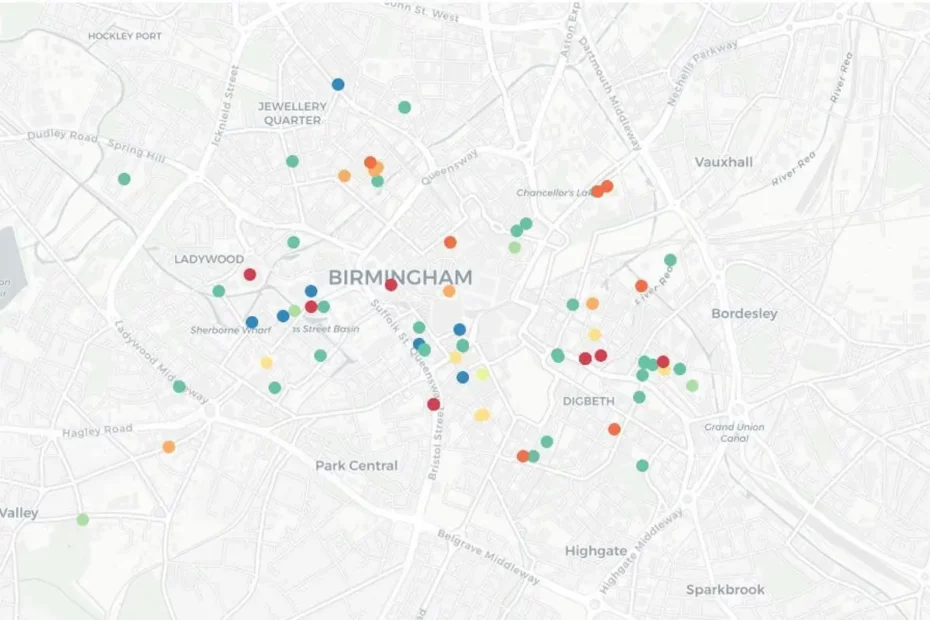
Recent research from UK Music has highlighted the economic contribution that music tourism has made to the UK economy, with the headline figures showing that 29.8 million people attended live music… Read More »A live music map for Birmingham in times of COVID-19
The use and influence of Artificial Intelligence (AI) in the creative industries is growing. AI techniques are already recommending us TV shows or music on services such as Netflix or… Read More »The implications of AI for the creative industries and how we should respond
New research shows that following the global financial crisis in 2008 we saw an accelerated trend towards a greater concentration of creative businesses in London. This should warn us against repeating… Read More »The importance of a UK-wide recovery plan for the creative industries
Understanding creative industries growth trends from 1991-2018 by mapping the geographical concentration and patterns.
AI and the creative industries Artificial Intelligence (AI) is the goal of developing machines with intelligent capabilities, such as pattern recognition, conversation and, ultimately, general intelligence itself. AI has seen… Read More »AI and the Creative Industries: The art in the artificial
The Creative Industries are seen as an key part of the knowledge economy, and policymakers invest considerable resources into developing new specialisms in the sector. The academic literature on local economic development… Read More »Relatedness between the Creative Industries and the wider economy: A primer
So I never thought I’d become a SIC and SOC code nerd. Neither an economist, nor a statistician, I’m still a regular user of stats to try and strengthen our… Read More »Counting craft
The overnight migration of schooling to the home in lockdown has re-energised interest in the idea of an ‘EdTech’ revolution. Online platforms are being used to help organise classes, deliver… Read More »We need a creative EdTech revolution in the COVID-19 lockdown
Yesterday’s publication of the latest DCMS Economic Estimates on Employment during 2019 paints a positive picture by suggesting the number of jobs in the cultural sector has grown by 24.0%. The cultural sector includes… Read More »Class, COVID-19, and cultural occupations
Looking back at the rise of streaming Over the past decade, digital technologies have brought huge changes in how we consume culture, from being able to re-watch our favourite films… Read More »Streaming culture
Insights from the nine-week study into consumers cultural consumption habits This is the latest release of the data from a survey of people’s consumption of culture through lockdown, commissioned by… Read More »Understanding how our habits of cultural consumption changed during lockdown – newest survey data
The sudden outbreak of COVID-19 and the lockdown has led to unprecedented changes in how we live, including the ways in which we interact with cultural content. Movement restrictions leading… Read More »Cultural consumption in the UK during the COVID-19 lockdown
Policy debates on the creative industries are mired in ambiguities and inconsistencies in terminology. Policymakers speak interchangeably of creative industries, cultural industries and creative economy. Cunningham (2009) compares the creative… Read More »Measuring the creative economy: A guide for policymakers
Why the government, funders and creative industries should come together to support cultural consumption in the Covid-19 crisis The world is at war against an invisible enemy. On the one… Read More »Home is where the art is
The COVID-19 crisis has generated an unprecedented level of economic disruption in a short space of time, with the nation’s economic activity having shifted essentially to a wartime footing against… Read More »10 tips for designing business surveys to understand the impacts of COVID-19 on the creative industries
How can creative businesses make the most of IP? How has technology affected the way we access scientific research and books? And how can producers of traditional food and drink… Read More »Accessing new ideas on intellectual property
With many arts and cultural charities having to restrict activities as a result of COVID-19, it is more important than ever to understand the key role they play and how… Read More »The impact of COVID-19 on arts and cultural charities
Using data science to understand the arts and cultural charities sector in England and Wales Charities affect all walks of life – they care for underprivileged people; they provide spaces… Read More »Charities speak
Authors: Heather Carey, Rebecca Florisson, Professor Dave O’Brien, Dr Neil Lee It was recently suggested that the pandemic poses ‘the biggest threat to the UK’s cultural infrastructure, institutions and workforce in a generation’… Read More »Getting in and getting on: Class, participation and job quality in the UK’s Creative Industries
Worldwide exports of creative goods exceeded 500 billion USD in 2015, with a 150% increase since 2002. In the UK, the creative industries have become an increasingly international sector in… Read More »12 facts about the UK’s international trade in creative goods and services
Research into freelancers, place-based growth and business models in the creative industries Alongside the PEC’s ongoing research programme, we also commission studies from research organisations which are outside of… Read More »Announcing our first commissioned research projects
As part of our research agenda around local growth, we consulted our Industry Champions on their experience of local policy interventions aimed at growing the creative industries. Our Industry Champions are trusted… Read More »How policymakers can support local growth in the creative industries
In early 2018 the then Secretaries of State for Business, Greg Clark, and Digital and Culture, Matt Hancock, announced a £150 million Creative Industries Sector Deal under the rubric of the government’s Industrial… Read More »Revisiting the creative industries: contestable narratives, the Sector Deal and the Policy and Evidence Centre
Creative industries have long been a focus of urban researchers and policymakers. There is a good reason for this: creative industries tend to cluster heavily in cities. In the UK, for… Read More »A first look at connections between the presence of creative industries and the wider urban economy
Expanding our network of Industry Champions Engagement with industry is crucial to the PEC’s success. Our network of industry champions help guide us on industry’s most pressing challenges, provide expert… Read More »Introducing the next wave: from poetry to pottery and illustration to immersive tech
One bright spot in an otherwise uncertain year for immigration policy, was the expansion in October 2019 of the UK’s Shortage Occupation List (SOL) to include many more creative industry roles. Prior… Read More »The hopes and fears that creative employers have for “points-based” skilled immigration post-Brexit
Coinciding with the publication of the House of Lords’ report Public Service Broadcasting: as Vital as Ever, our researchers from Cardiff University offered an overview of the main findings and recommendations… Read More »The challenge of engaging young audiences
In our recent PEC Discussion Paper, Immersive experiences in museums, galleries and heritage sites: a review of research findings and issues, we presented an overview and guide on immersive experiences for those… Read More »What are the ethical implications of immersive experiences in arts and heritage sites?
As a wealth of immersive creative talent emerges in the UK, Catherine Allen and Chris Sizemore of Limina Immersive argue that more investment must be made into addressing how arts… Read More »Immersive media in the UK: reaching present-day audiences should not be an afterthought
What happens when your copyright is infringed and the infringer won’t pay up or won’t stop infringing? Court action through the Intellectual Property Enterprise Court (IPEC) has been made more… Read More »Shedding light on the workings of the Intellectual Property Enterprise Court
As we learn from the recent Ofcom and House of Lords Committee on Communications and Digital about the challenges that digital media giants present to public service broadcasting, Professor Leighton Andrews explores the threats that Facebook’s… Read More »Facebook’s advertising model threatens democratic values but regulators do have options to intervene
There is a rapidly growing body of international evidence that employers, as they navigate an increasingly digital and complex world, will in the future even more so than now value human skills… Read More »An opportunity for England to learn about the creativity of its people
What does the nature of a centenary commemoration tell us about collective memory and current social attitudes? How have commemorations changed over time? What are the most appropriate ways to… Read More »The continuing significance of the centenary
Following a nine-month evidence synthesis and scoping exercise undertaken by the PEC team leading on work in skills, talent and diversity, from the Work Foundation at Lancaster University, this evidence review… Read More »Skills, talent and diversity in the creative industries: critical issues and evidence gaps
The House of Lords Communications and Digital Committee has published its report ‘Public Service Broadcasting: as Vital as Ever’, offering strong support for the continued provision of Public Service Broadcasting (PSB) in the… Read More »House of Lords Communications and Digital Committee recommend greater safeguards for public service broadcasting
Interest in immersive experiences in museums and heritage sites has increased in recent years in response to challenges faced by the sector and the potential of emerging technologies. Arts and… Read More »Immersive experiences in museums, galleries and heritage sites: a review of research findings and issues
Interest in immersive experiences in museums, galleries and heritage sites has increased in recent years in response to some of the challenges those sectors face and given the potential of… Read More »Capturing the value of immersive experiences in museums, galleries and heritage sites
The global economic order fails to understand the creative industries as producing trade. Trade statistics do not account for royalty payments. Trade agreements fail to address streaming (typically classified as… Read More »Discontent industries? Creative works and international trade law: making sense of ‘analogue’ IP rules in a digital age
The creative industries – from film, to fashion, to creative technology – are rightly lauded as a thriving part of the UK economy, contributing £101.5bn GVA and employing more than 2 million people. However,… Read More »How evidence should guide manifesto promises on the Creative Industries
Applications closed on Monday 30th September 2019 The Management Board of the Creative Industries Policy and Evidence Centre (PEC) is pleased to issue this call for proposals to the research… Read More »Call for research proposals
Our Industry Champions identify the policy changes needed to help their organisations and sectors I’ve been advocating on behalf of the creative industries for some time now, and I remember… Read More »An industry take on policy changes needed in the creative industries
A common finding in studies on the future of work is that employers will increasingly demand digital skills and creative skills. Some studies go further and suggest that the sweet spot will… Read More »The creative digital skills revolution
The UK’s Creative Industries have been growing rapidly, both in terms of employment and economic output. They also make a valuable contribution to the UK’s balance of trade. However, our latest… Read More »Looking at regional inequalities in the UK’s creative industries
Using official Department for Digital, Culture, Media and Sport (DCMS) Economic Estimates, this Discussion Paper examines the distribution and growth of the Creative Industries in the UK at the regional… Read More »Mind the gap: regional inequalities in the UK’s creative industries
Insights from our Industry Champions As part of the Creative Industries Policy and Evidence Centre (PEC’s) research agenda around the value of creative education, we consulted our Industry Champions on their experience… Read More »The value of creative higher and further education
Defining culture, defining value Arts and cultural institutions must strive to be nimble in a fast-changing funding environment characterised by declining public spending commitments. One of the most difficult challenges is… Read More »The value of arts and culture
A new AHRC-funded Research Network, InnoPSM, at the University of Westminster brings together European practitioners, policymakers and scholars to innovate for better organisational and public policies for PSM. InnoPSM will connect… Read More »How do we safeguard public service media? Collaboration may be the answer
The term “big data” may bring to mind swaths of private information held by tech companies. But lots of big data is, in fact, visible to all – we just… Read More »Getting creative with big data to examine gender inequality
This report details the results of a survey of employers commissioned by the Creative Industries Council (CIC) from December 2017 to January 2018. The CIC survey ‘piggybacked’ on the Department… Read More »The migrant and skills needs of creative businesses in the UK
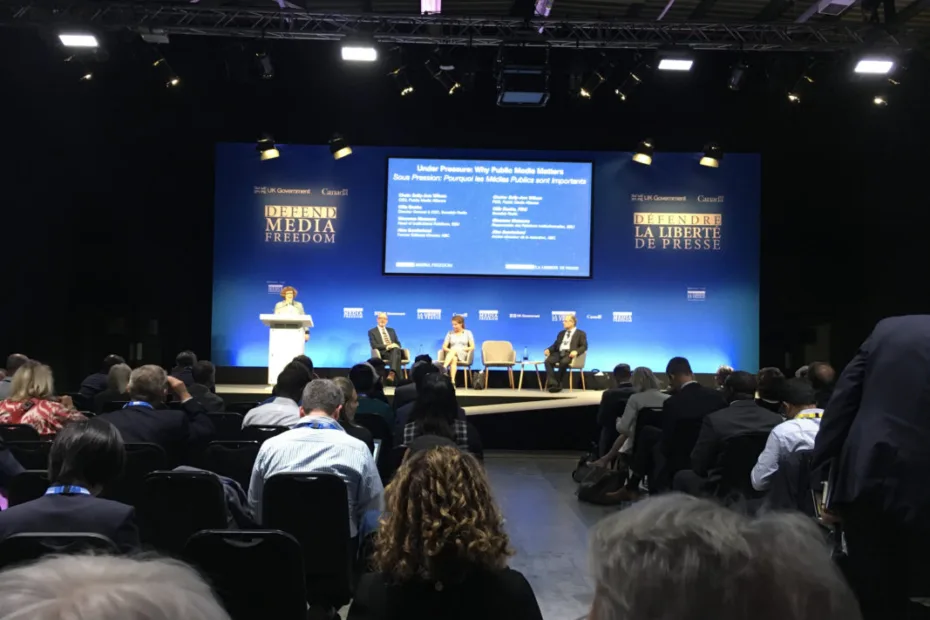
The number of journalists killed worldwide in retaliation for their news reporting nearly doubled in 2018 compared to the previous year, and yet independent journalism has never been more necessary… Read More »Why public media matters
The broad scope of the PEC’s arts and culture area of work is orienting us in many directions; some anticipated, others less so. Given the priorities set by Arts Council… Read More »Heritage, community and opportunity: a lesson on how to understand the value of culture
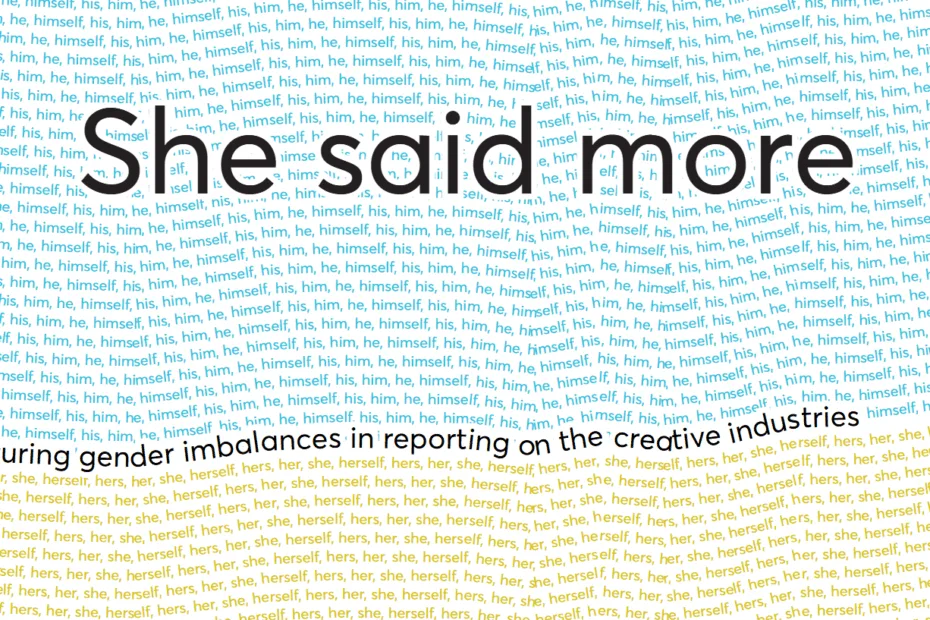
Measuring gender imbalances in reporting on the creative industries Researchers analyse over half a million articles published across almost 20 years to examine gender imbalances in media reporting 22nd July… Read More »Press release: How big data and machine learning can be used to generate more meaningful insights on gender inequality
Measuring gender imbalances in reporting on the creative industries The media’s reporting of women in the creative industries has changed markedly in recent years. Not only has there been a… Read More »She said more
The PEC is a fascinating opportunity to connect a whole range of different research approaches, answering questions about the creative industries that are beyond the scope of any one academic… Read More »Why is understanding inequality important to understanding the creative economy?
The economic value of our creative industries is clear. But are they a priority for Britain’s political leaders? The impressive growth performance of the UK’s creative industries, from design and… Read More »Silence speaks volumes
Industry engagement is crucial to our success as a policy & evidence centre for creative industries The impressive growth performance of the UK’s creative industries – from design and advertising… Read More »Meet the PEC’s network of Industry Champions
How can it be managed and grown? This report brought together views from Nesta on better ways of mapping and measuring public value. It built on work Nesta has done… Read More »Public Value
The PEC’s Policy Unit is consulting across the creative industries on research priorities The PEC’s vision is to provide independent research and authoritative recommendations that will aid the development of… Read More »We are consulting on research priorities
The PEC & the British Council collaborate on international learning for the UK’s creative industries We’re delighted to announce that the Creative Industries Policy and Evidence Centre (PEC) and the… Read More »Introducing the PEC’s International Council
As economic studies in the UK and Australia develop increasingly granular accounts of the financial returns to graduates according to their field of study, the question of the value of tertiary… Read More »Accounting for creative graduates
New report from the Institute for Fiscal Studies on higher education subsidies in the loan system shines a light on long-term costs of creative arts The recent report from Institute for… Read More »Creative accounting
In our area of work, my fellow researchers and I are exploring a set of research questions inspired by our ongoing assessment of the pressing issues for sustainable value creation… Read More »The public values of public service broadcasting
The economic statistics for the creative industries speak for themselves The UK’s Industrial Strategy recognises that the creative industries are a national strength. In 2017, their contribution in current prices… Read More »A policy and research agenda for the creative industries
I was recently reminded of a ‘think piece’ that I wrote in 2005, for the then Department of Trade and Industry (now BEIS), on the role of design in business… Read More »Design: a “General Purpose Creativity” which the UK is extremely well placed to leverage
Creative industries in the global economy Recent international trends show that the creative industries are gaining pace not only in advanced economies (the so-called global North) but also in less advanced ones… Read More »How internationally competitive are the creative industries?
The Creative Industries Policy and Evidence Centre (PEC) offers a unique opportunity to respond to a dramatic challenge to the industrial organisation of the creative industries: Are the creative industries… Read More »Regulating a platform economy
The creative industries, from film and the wider screen industries to design, advertising and the digital economy, are vital to the UK economy. Dynamic, innovative, and export-orientated, they are one… Read More »Driving more successful creative industries through diversity and investing in talent
Location matters, especially in the creative industries. The area of work I am leading will be looking at two important ways that location impacts the creative industries: creative clusters, and… Read More »How location impacts the creative industries
First study from the PEC uses 35 million UK job adverts to look at creativity & the future workforce 13th November 2018 – A new study(1) of 35 million UK… Read More »Press release: New research shows creativity will become even more important to the growth of jobs between now and 2030
At a time when all jobs, whether in a coffee shop or a bank, can seemingly be described as creative, you’d be forgiven for thinking the word had lost all… Read More »Creativity and the future of skills
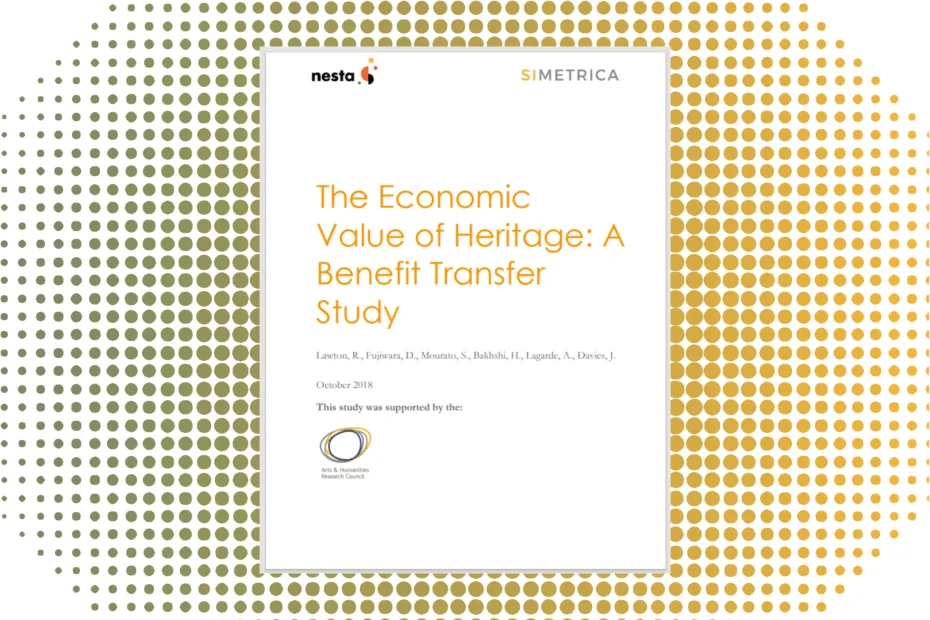
This report by Nesta and Simetrica looked at the value that users (residents and visitors) and non-users obtain from historic cities and their cathedrals. The researchers used a technique known… Read More »The Economic Value of Heritage
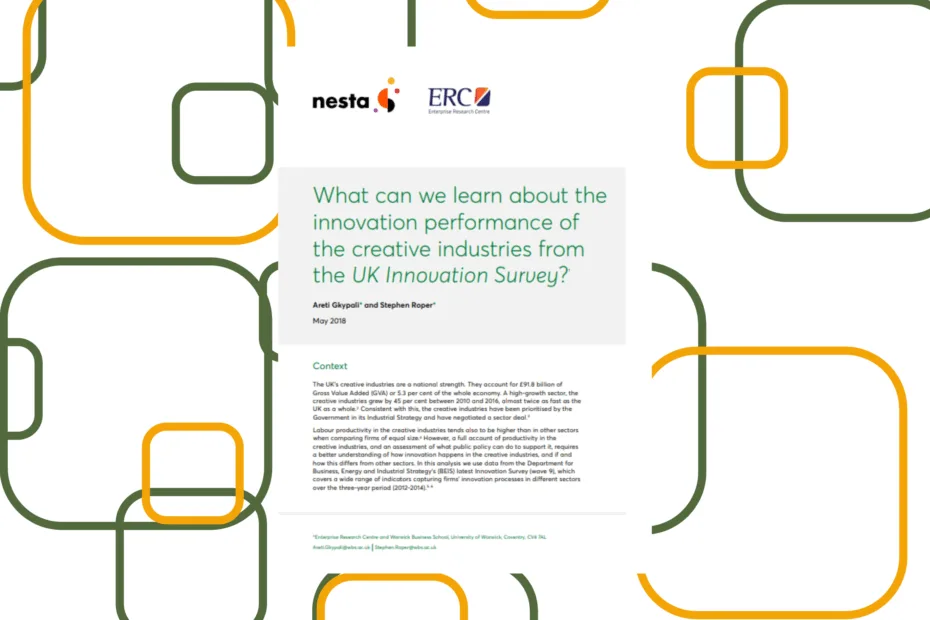
In this paper the authors considered how the innovation processes used by creative industries businesses compare with those used in other sectors. The analysis used data from the Department for… Read More »What can we learn about the innovation performance of the creative industries? (2018)
This report used web data to identify and map the organisations developing and applying new technologies in the UK. This report, commissioned by Immerse UK with funding from Innovate UK,… Read More »The immersive economy in the UK
This paper was intended to serve as a prompt for Arts Council England’s consultation activity over the forthcoming months, with the intent of provoking a conversation with arts and cultural… Read More »Experimental Culture: A horizon scan for the arts and culture sector
This report used official, open and web data to map the creative industries in the UK, their evolution, contribution to local economic development, the strength of their support ecosystems –… Read More »Creative Nation
This report mapped out how employment was likely to change in the future – including the implications for skills – and anticipates a number of new occupations. The study challenged… Read More »The Future of Skills: Employment in 2030
Trends impacting on US and UK employment in 2030 The drivers of change shaping the future of US and UK employment and the need for different skills. This slide deck… Read More »The Future of Skills
Understanding how video games playing affects individuals This study addressed the important and recurring question of whether playing video games is detrimental to the socio-economic development of a person. Publication… Read More »Did you really take a hit?
Classification, Measurement andLegitimation of the Creative Economy This report reviewed how policymakers can use data to measure and support the growth of creative clusters. This report illustrated how measurement of… Read More »Putting Creativity on the Map
This report argued that to support the growth of the creative industries, we need to ensure that the UK is able to access talent from outside of Europe. Publication date:… Read More »Skilled migration and the UK’s creative industries
This report, in partnership with Creative England, used the latest data and official definitions to map the creative industries in the UK. The goal was to provide a data resource… Read More »The Geography of Creativity in the UK
This report argued that new DCMS statistics on the cultural sector, alongside the creative industries estimates, will create an important opportunity to revisit the scope of cultural policy in the… Read More »Cultural policy in the time of the creative industries
The Economic Returns to Combining Arts and Science Skills This report explores the performance of businesses with fused skills – thosecompanies that fuse science and arts skills. It uses official… Read More »The Fusion Effect
This report measured employment in the creative economies of the US, Canada and the UK. It provided consistent statistics on the US and Canadian creative economies in comparison to the… Read More »Creative Economy Employment in the US, Canada and the UK
This report was by Nesta and Tech City UK and produced in partnership with GrowthIntel. It was the most comprehensive analysis of the UK’s digital tech industries to date, and… Read More »Tech Nation 2016
This report compared the size and growth of the EU’s creative industries on a consistent basis. It also provided consistent statistics for the creative economies (employment in creative industries and… Read More »Creative economy employment in the EU and UK: A comparative analysis
UK businesses need the right analytic skills to thrive in the big data era. This report identified what these skills are, and the situation in the labour market for data… Read More »Skills of the Datavores: Talent and the data revolution
Using social media data to understand the impact of a conference on social networks The research used social media data from Twitter to develop a methodology for understanding the effects… Read More »The Net Effect
How social media platforms can help UK publishers understand their market in China In this paper, the authors explored how British publishers and writers can negotiate some of the market… Read More »Found In Translation
Applying RCT+ to the case of Creative Credits In this paper the authors assessed the Randomized Controlled Trial plus (RCT+) approach through an evaluation of Creative Credits – a UK… Read More »Assessing an experimental approach to industrial policy evaluation
This report was the first systematic analysis of employment in the UK’s creative and high-tech economies. It analysed their size, growth and distribution across the country. The report showed that… Read More »Geography of high tech and creative economies 2015
This report took a big data approach to measure and map the UK games industry and track its evolution over time. The analysis revealed a games industry which is larger… Read More »A Map of the UK Games Industry
An econometric analysis of the relationship between arts and cultural clusters, wages and the creative economy in English cities In this paper, the authors built an econometric model that explores… Read More »Capital of Culture?
Estimating the effect of data and online analytics on firm performance This paper used a survey of data activity for 500 UK firms which were commercially active online to quantify… Read More »The analytical firm
Making money work harder for the arts This report showed how a portion of arts funding could be reinvented, making use of new methods that would bring in additional finance… Read More »The New Art of Finance
An Application to London’s National Theatre The authors used data for the UK’s early National Theatre (NT) Live broadcasts to conclude that live broadcasts generated greater, not fewer, audiences at… Read More »Estimating the Impact of Live Simulcast on Theatre Attendance
How data and online analytics affect business performance This briefing paper describes the background, data, method and findings of an analysis of the link between data activity and business performance.… Read More »Inside the Datavores
Adjusting the R&D Tax Credit:boosting innovation in theUK video games industry The UK is home to a renowned video games development industry and is a place where global publishers have… Read More »The Innovation Game
This report examines the results of a pilot study, which used a method of evaluation called randomised control trials (RCTs), to see if a popular business support scheme called Creative… Read More »Creative Credits: A randomized controlled industrial policy experiment
The manifesto set out a 10-point plan to bolster the creative industries, one of the UK’s fastest growing sectors. Publication date: 30 October 2013
This report presented a new way of classifying the UK’s creative industries, and highlighted a number of problems with the current government definition. The paper argued that, despite its strengths,… Read More »A Dynamic Mapping of the UK’s Creative Industries
This report looked at how only a small minority of UK businesses use data analysis despite the significant benefit it brings. A business survey by Nesta showed how a small… Read More »Rise of the datavores: how UK businesses can benefit from their data
Crossing the River by Feeling for Stones UK creative industries have yet to take advantage of China’s growth. This paper looked at the barriers to doing business in China, and… Read More »Crossing the River by Feeling for Stones
This paper was based on a speech by Hasan Bakhshi, and makes the case for more rigorous valuation studies of cultural institutions. The speech was delivered at Culture Count: Measuring… Read More »Measuring Cultural Value
This working paper looked at the short-term impact of the Creative Credits pilot scheme which operated in the Manchester region from 2009 to 2010. Publication date: 04 May 2011
This paper proposed a new model for innovation policy, which supports the generation and exploitation of new ideas. Innovation policy has desirable effects distinct from those sought by industrial policy:… Read More »State of Uncertainty
This report attempted to map the UK’s creative clusters and makes a case for a new approach to local economic policy. The study adopted the concept of creative clusters as… Read More »Creative Clusters and Innovation
An economic analysis of innovationin arts and cultural organisations This report tackled the question of how cultural organisations can find ways to innovate in the tightest funding environment they’ve ever… Read More »Culture of Innovation
Digital innovation in the performing arts The researchers conducted an in-depth research study on the two National Theatre Live pilots that were broadcast in 2009 – Phèdre on 25th June… Read More »Beyond Live
Project finance and video games development in the UK This briefing investigated the value of external project finance to the video games sector, and suggested ways of encouraging it. Publication… Read More »The Money Game
A Survey on the impact of a tax credit for cultural video games in the UK development sector Time to Play looked at the potential impact of a tax credit… Read More »It’s time to play by Games Investor Consulting
Fifth generation innovation, behavioural constraints, and the role of creative business – considerations for the NESTA innovation vouchers pilot This research set out an argument that behavioural biases and habits… Read More »Nudging Innovation
This paper investigated the role that arts and humanities research plays in the innovation system. This research suggested innovation flourishes when there is a strong knowledge base combined with a… Read More »Arts and Humanities Research and Innovation
How fine arts graduates contribute to innovation This report gave insights into how fine arts graduates contribute to innovation in the creative industries and beyond, and what policymakers can do… Read More »The art of innovation
Mapping the creative economyin the United Kingdom This report argued for a nationwide strategy to put entrepreneurship at the heart of education for the creative industries. There have been renewed… Read More »Beyond the creative industries
Do the creative industries supportinnovation in the wider economy? This report presented the results of research into the role of the creative industries in stimulating and supporting innovation in the… Read More »Creating Innovation
The economic performance of the UK’s creative industries This analysis by The Work Foundation and NESTA researchers puts at the heart of the UK economy scriptwriters, computer programmers, designers and… Read More »Staying ahead